
Hydroponics uses a few biological and environmental terms that can sound complicated at first. But once you understand them, managing a hydroponic system becomes much easier. These terms explain how plants drink water, absorb nutrients, breathe, and grow.
Successful hydroponics isn’t about luck; it’s about managing following four interconnected “engines”: The Roots, The Leaves, and The Environment that drive the plant growth.
- The Foundation (The Reservoir and Water)
- Reservoir
- pH
- EC
- The Root Zone (The Intake)
- Root Oxygenation
- Dissolved Oxygen
- Nutrient Uptake
- The Plant Engine (The Processing)
- Photosynthesis
- Stomata
- Foliar Feeding
- The Atmosphere (The Flow)
- Transpiration
- VPD
A) The Foundation (The Reservoir and Water)
Success in hydroponics begins in the reservoir, where you act as the plant’s life support system by managing the liquid environment. By mastering these foundational water metrics, you ensure that every drop of solution is chemically optimized for immediate nutrient availability and root health.
Reservoir (Hydroponic Nutrient Reservoir)
A reservoir is the container that stores the nutrient solution used in a hydroponic system. It acts as the central supply of water and dissolved nutrients that plants absorb through their roots. In most hydroponic setups, the reservoir connects to the system through pumps, pipes, or channels to deliver nutrients to the plants.
Reservoirs are essential in many hydroponic systems, such as NFT (Nutrient Film Technique), DWC (Deep Water Culture), Drip Systems, and Aeroponics.
pH tells you how acidic or alkaline your nutrient solution is. pH scale runs from 0 to 14. A pH value equal to 7.0 considered Neutral, below 7 is considered Acidic and above 7 is considered Alkaline.
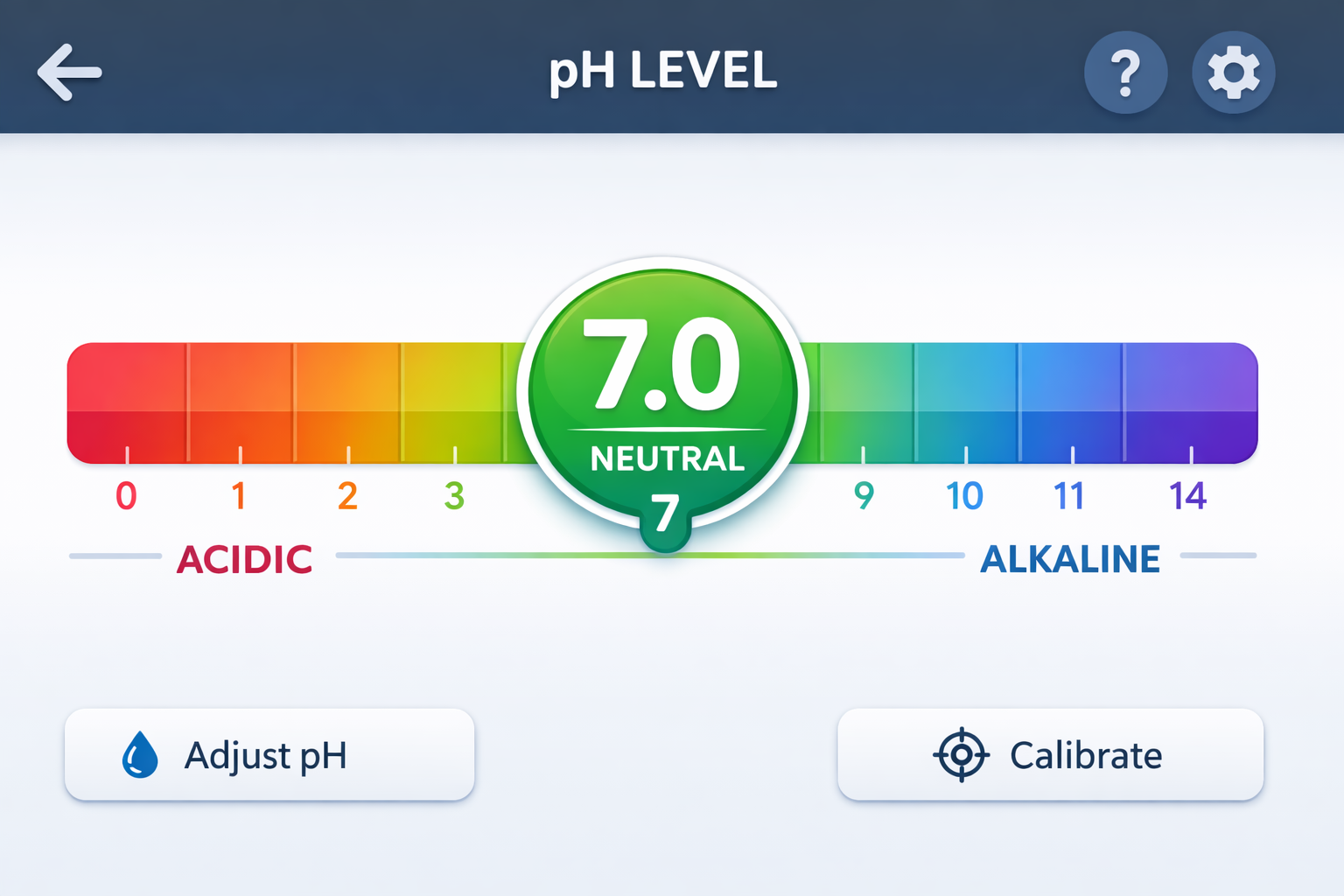
For most hydroponic crops, the ideal pH range is 5.5 to 6.5. This range allows plants to absorb all essential nutrients properly. pH Control in hydroponics is important for Nutrient Absorption. Even if your water in hydroponic system has all nutrients, plants can’t absorb them if pH is wrong.
Electrical Conductivity (EC)
EC measures the concentration of dissolved nutrients in the hydroponic solution. Typical recommended EC ranges for a Crop depends on Development stage and the crop.
- Higher EC means More nutrients in water
- Lower EC means Fewer nutrients
Too high EC can burn roots, while too low EC can cause nutrient deficiency.
B) The Root Zone (The Intake)
The root zone is the critical engine of your system, where physical contact between the nutrient solution and the plant’s vascular network occurs. By optimizing oxygen levels and nutrient availability in this zone, you transform a simple water tank into a high-speed intake highway for explosive growth.
Root Oxygenation
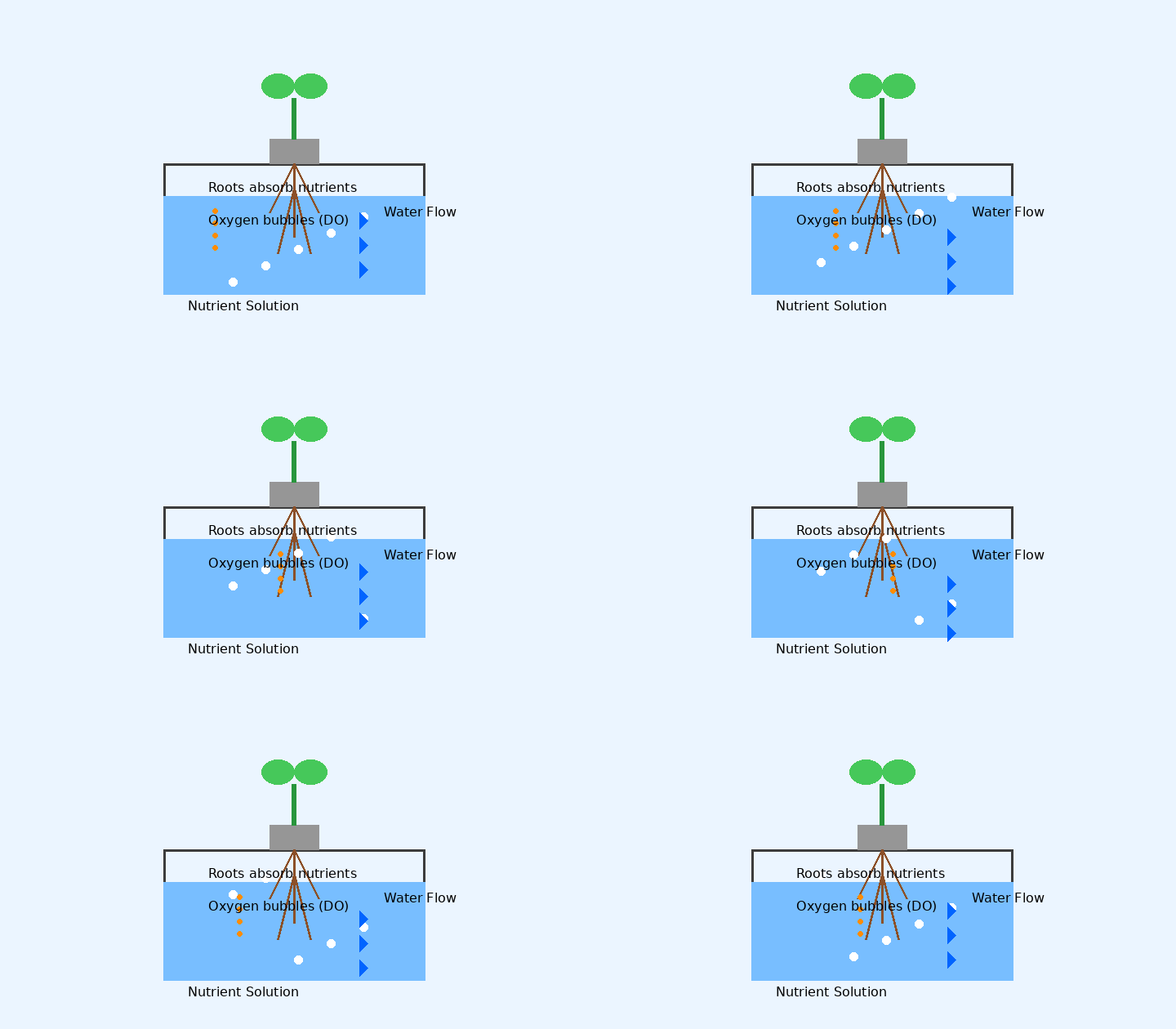
Roots also breathe. They require oxygen dissolved in water to function properly. In hydroponics, oxygen reaches roots through Air stones, Water movement, Thin nutrient films (NFT systems).
If oxygen levels drop, roots may suffer from root rot and nutrient uptake decreases. Healthy hydroponic roots usually look White, Firm and Highly branched.
Dissolved Oxygen (DO) in Hydroponics
Dissolved Oxygen (DO) refers to the amount of oxygen gas dissolved in the nutrient solution. In hydroponic systems, plant roots need oxygen to perform cellular respiration, which allows them to absorb water and nutrients efficiently. Unlike soil, hydroponic roots are surrounded by water, so maintaining sufficient dissolved oxygen is critical for root health and plant growth.
Roots use oxygen to convert sugars into energy. This energy powers Nutrient uptake, Root growth, Cell respiration, Disease resistance. Low oxygen levels can quickly lead to root stress and poor nutrient absorption.
Most hydroponic crops perform best when dissolved oxygen levels are between 6 – 8 mg/L (ppm). Water temperature, water movement and aeration influence oxygen levels in the nutrient solution.
Plants absorb nutrients in the form of dissolved ions from the nutrient solution. Many beginners in hydroponics fail not because of system design, but due to improper understanding of hydroponic nutrients. Unlike soil farming, hydroponics depends entirely on nutrient solutions for plant growth.
The best hydroponic nutrients are specialized water-soluble solutions containing essential N-P-K ratios and micronutrients. In hydroponics, nutrient uptake depends heavily on pH, EC (Electrical Conductivity), Root health, and Transpiration rate.
C) The Plant Engine (The Processing)
The “Plant Engine” is where the magic happens, turning raw light and water into physical growth and energy. By mastering the internal mechanics of the leaf, you move beyond just “feeding” your plants and start driving their metabolic speed for maximum yield.
Photosynthesis
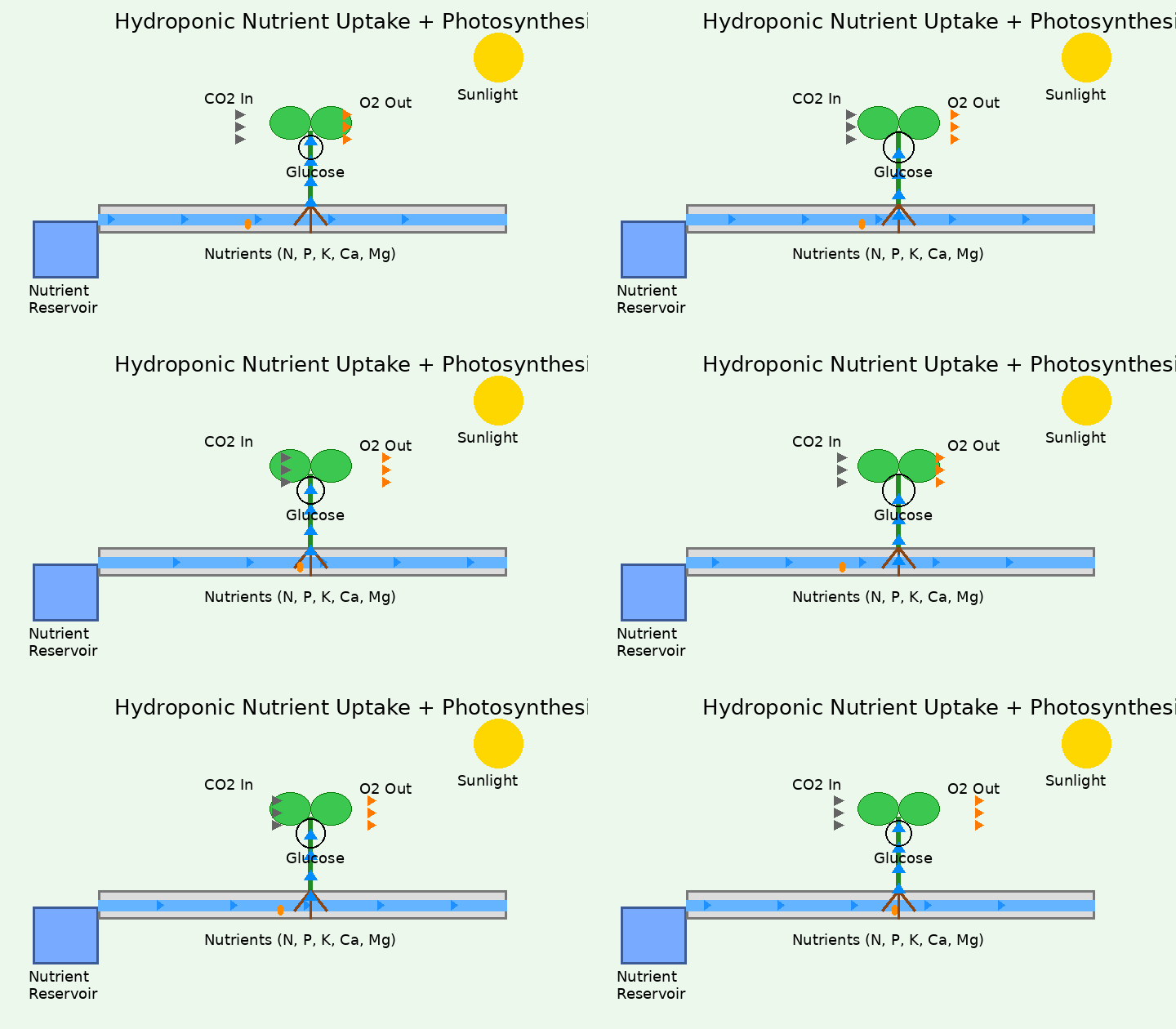
Photosynthesis is the process where plants produce food using light, water, and carbon dioxide.
The basic reaction is: Carbon dioxide + Water + Light → Glucose (plant food) + Oxygen
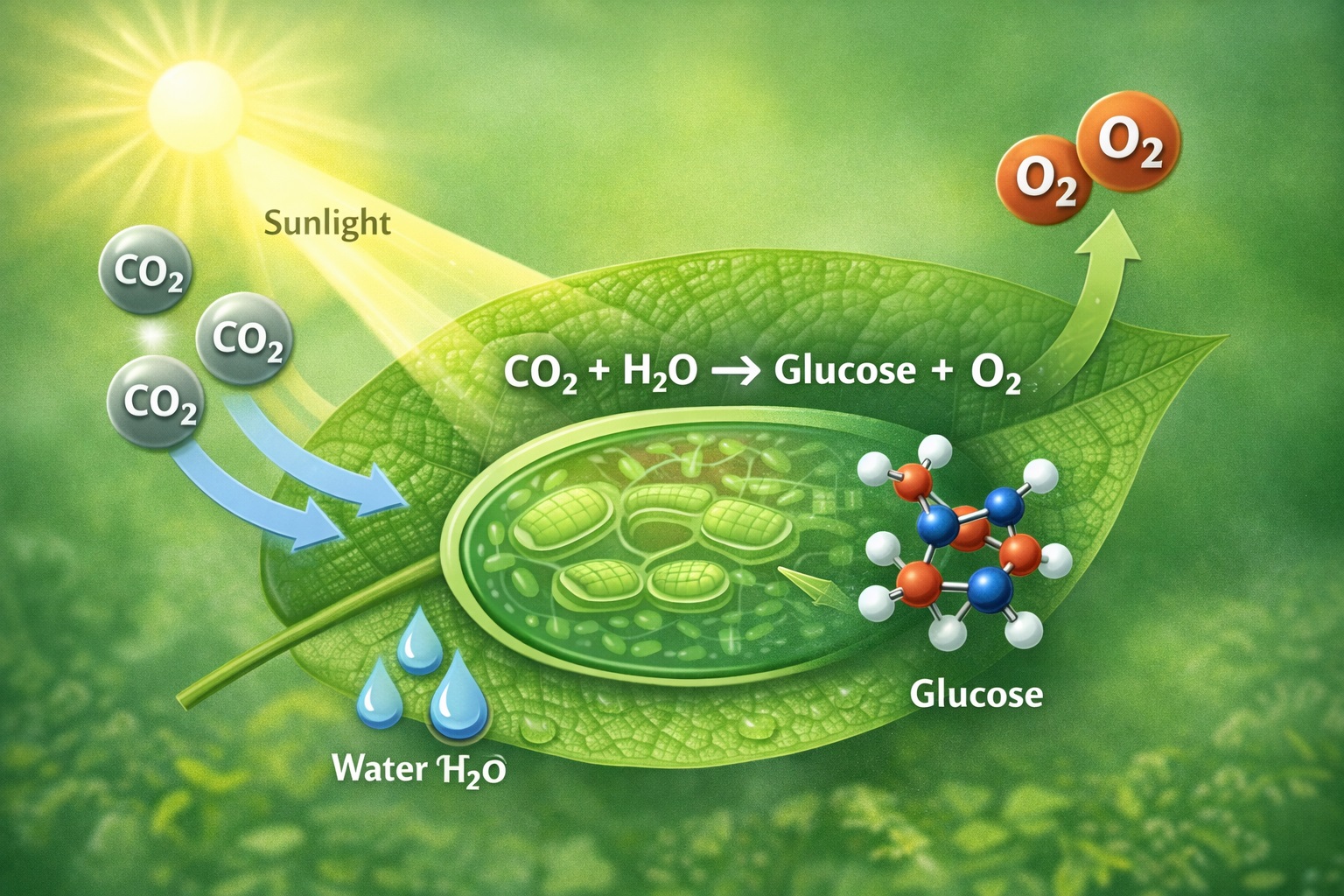
In hydroponics photosynthesis depends on Light intensity, CO₂ availability, Nutrient availability and Temperature. If any of these are limited, plant growth slows down.
Stomata
Stomata are tiny pores present on the surface of plant leaves. They act like small adjustable valves.
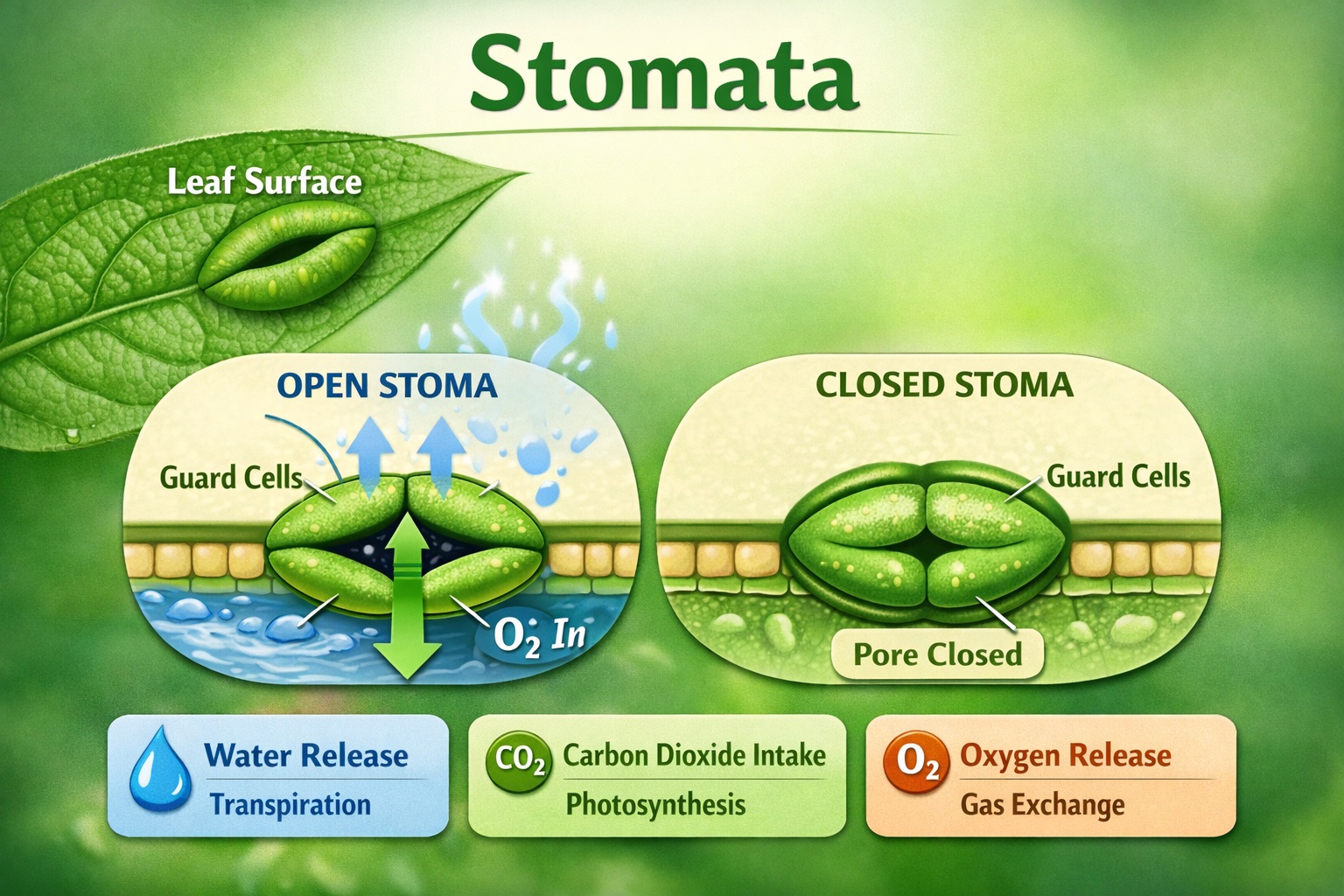
Stomata control Water release (transpiration), Carbon dioxide intake for photosynthesis and Oxygen release. Guard cells around the stomata open and close depending on environmental conditions.
- In good conditions, stomata open wide.
- In very dry air, they close to prevent water loss.
- If stomata remain closed for long periods, plant growth slows down.
Foliar Feeding
Foliar feeding is the practice of applying diluted nutrient solutions directly to plant leaves using a fine spray. Plants can absorb certain nutrients through their leaves via stomata and the leaf surface, allowing for faster nutrient uptake compared to root absorption.
In hydroponics, foliar feeding is often used to quickly correct nutrient deficiencies or provide micronutrients such as iron, calcium, or magnesium. Because nutrients are absorbed directly by the leaves, plants can respond more quickly than when nutrients are supplied only through the root zone.
For best results, foliar sprays are usually applied early in the morning or late in the evening, when temperatures are lower and stomata are more open. This helps improve nutrient absorption and reduces the risk of leaf burn.
D) The Atmosphere (The Flow)
The atmosphere is the invisible driver of your entire system, acting as the “pump” that pulls nutrients from the roots to the leaves. By mastering the balance between temperature and humidity, you create a seamless flow that keeps your plants breathing, cooling, and growing at their genetic potential.
Transpiration
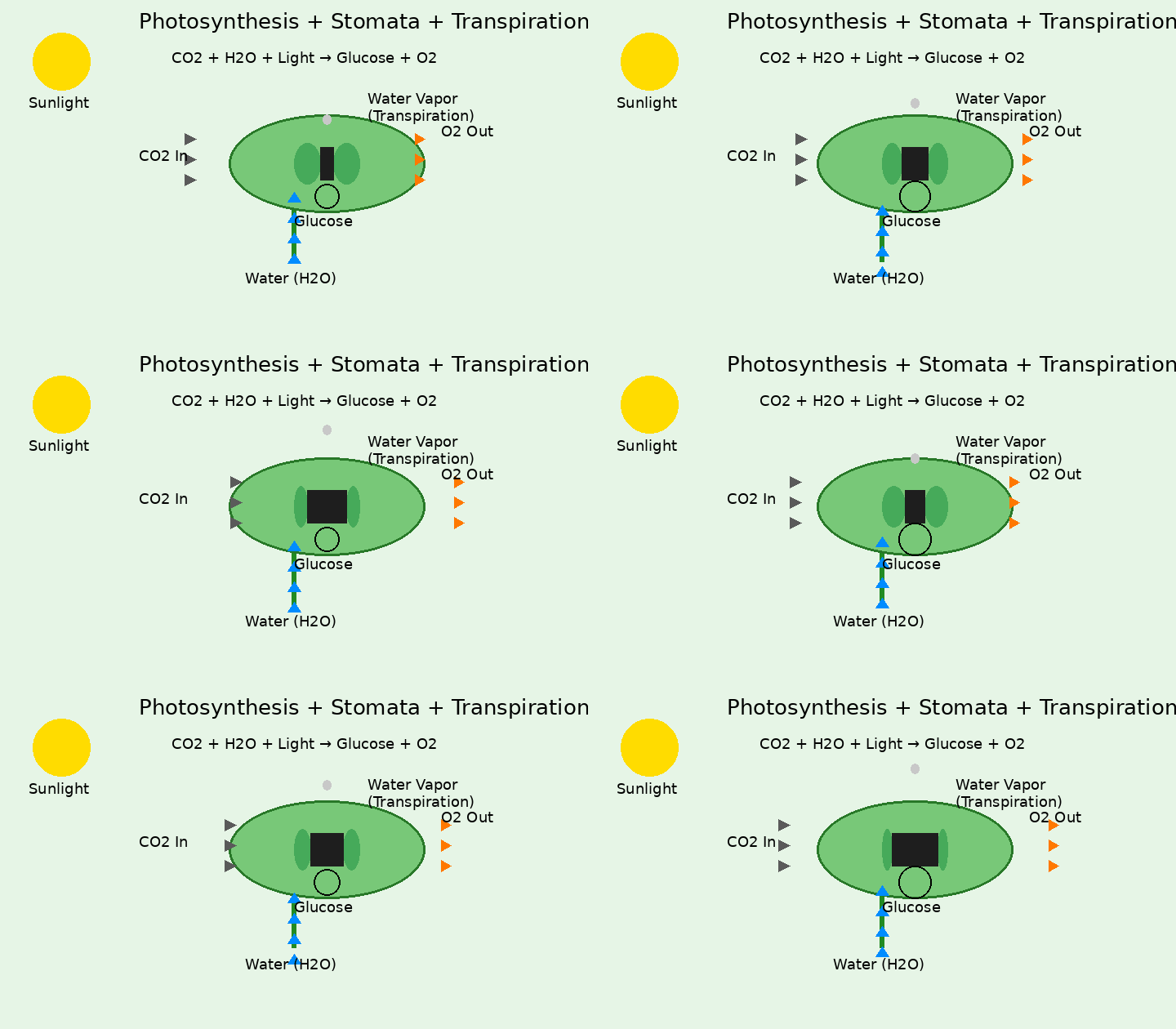
Transpiration is the process where plants release water vapor through tiny pores in their leaves called stomata. Think of it like plant sweating.
Transpiration works when Roots absorb water from the nutrient solution, that results in water upward movement through the stem. Some of this water is used for growth, The rest evaporates from leaves through stomata.
Transpiration actually drives nutrient movement inside the plant. When plants lose water through leaves, they pull more water and nutrients from the roots. Several environmental conditions suchas Temperature, Humidity, Air movement and Light control transpiration.
VPD (Vapor Pressure Deficit) describes the relationship between temperature and humidity and how it affects plant transpiration. It tells us how strongly the air pulls water from plant leaves.
- Low VPD → Air is humid → Transpiration slows
- High VPD → Air is dry → Transpiration increases
Managing VPD helps plants absorb nutrients efficiently without stress.
Key Takeaway
Understanding these core hydroponic terms helps growers control plant growth more precisely.
Key processes like transpiration, stomatal behavior, nutrient uptake, and VPD work together to determine how efficiently plants grow in a hydroponic system.
When growers monitor environmental conditions such as temperature, humidity, EC, and pH, they can create the ideal environment where plants absorb nutrients efficiently and grow faster.
In hydroponics, success is not just about providing nutrients, it is about understanding how plants interact with their environment.