
Plants are living systems that constantly respond to their environment. In hydroponics or soil cultivation, even small imbalances in nutrients, temperature, humidity, or airflow can lead to visible plant problems.
Some of the most common issues growers observe include nutrient burn, leaf tip burn, and stomatal closure. Understanding these problems early can help growers prevent crop stress and maintain healthy plant growth.
Common Plant Problem their Cause and how to fix them?
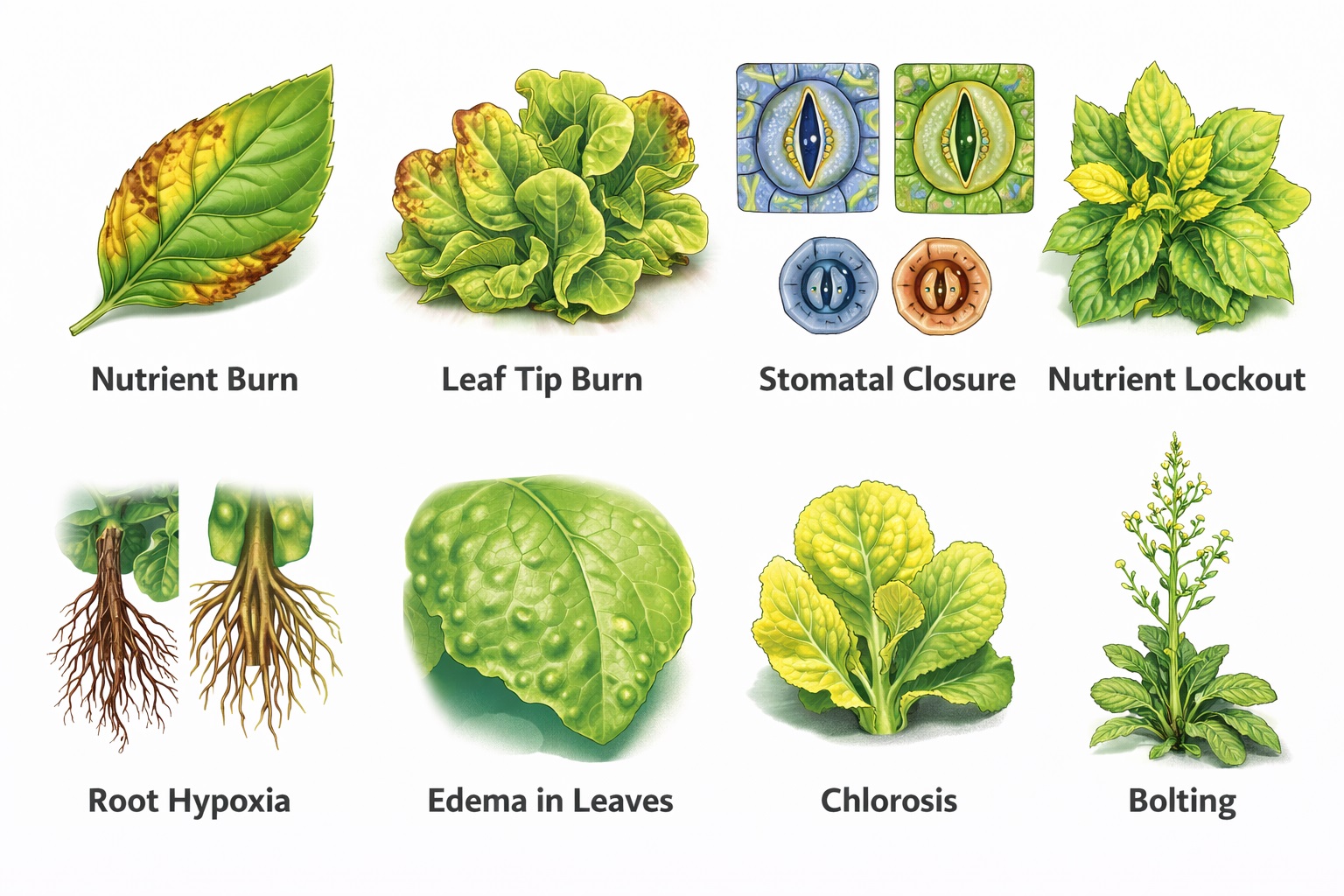
1. Nutrient Burn
Nutrient burn occurs when plants receive more nutrients than they can absorb or process. This often happens in hydroponic systems when the Electrical Conductivity (EC) of the nutrient solution becomes too high.
When excess salts accumulate around the roots, water movement into the plant becomes difficult. As a result, the plant tissues start to dehydrate, especially at the leaf tips and edges, where nutrient concentration tends to accumulate.
Common Symptoms for Nutrient Burn
- Brown or yellow burnt tips on leaves
- Leaf edges becoming crispy
- Dark green foliage in early stages
- Leaves curling downward in severe cases
Why Nutrient Burn Happens
Following factors can trigger nutrient burn:
- Over-concentrated nutrient solution
- Improper EC monitoring
- Low water uptake due to poor environmental conditions
- Salt accumulation in the root zone
How to Prevent Nutrient Burn
- Maintain EC within recommended crop limits
- Regularly monitor nutrient concentration
- Flush the system with fresh water when EC rises too high
- Adjust nutrient dosing gradually rather than suddenly increasing concentration
2. Leaf Tip Burn
Tip burn is a physiological disorder commonly seen in fast-growing leafy crops like lettuce and spinach. It usually occurs when calcium fails to reach the developing leaf tissues.
Unlike nutrient burn caused by excess fertilizer, tip burn happens because the plant cannot transport enough calcium to new leaves.
Common Symptoms for Leaf Tip Burn
- Browning of young leaf edges
- Necrosis on inner leaves
- Burnt appearance on rapidly growing tissues
- Often seen in the center of lettuce heads
Why Leaf Tip Burn Happens
Calcium moves in plants through transpiration flow. If transpiration is restricted, calcium transport slows down. This can happen due to:
- High humidity
- Poor air circulation
- Rapid plant growth
- Low calcium concentration in nutrient solution
How to Prevent Leaf Tip Burn
- Improve air circulation around plants
- Maintain balanced humidity levels
- Ensure sufficient calcium in the nutrient solution
- Avoid extremely rapid growth conditions
3. Stomatal Closure
Stomata are tiny pores present on the surface of leaves. They control two important processes:
- Gas exchange (CO₂ intake for photosynthesis)
- Water vapor release through transpiration
Each stoma is controlled by guard cells that open and close depending on environmental conditions.
What is Stomatal Closure?
Stomatal closure occurs when the plant shuts these pores to prevent excessive water loss. While this helps the plant survive stressful conditions, it also slows down photosynthesis and nutrient uptake.
What Causes Stomata to Close?
Plants may close their stomata due to several stress factors:
- Very high temperatures
- Low humidity (high VPD)
- Water stress in the root zone
- Excess salinity in nutrient solution
- Lack of carbon dioxide
Effects of Stomatal Closure on Plant Growth
When stomata remain closed for long periods:
- Photosynthesis slows down
- Nutrient uptake decreases
- Plant growth becomes slower
- Leaves may appear dull or stressed
How Growers Can Manage Stomatal Closure
To keep stomata functioning properly:
- Maintain balanced temperature and humidity
- Keep VPD in the optimal range
- Ensure proper irrigation and root oxygenation
- Avoid extreme environmental fluctuations
4. Nutrient Lockout
Nutrient lockout happens when nutrients are present in the solution or soil but plants cannot absorb them. This is one of the most confusing issues for growers because adding more fertilizer often makes the problem worse instead of fixing it.
In hydroponics, nutrient lockout is usually caused by incorrect pH levels. When the pH moves outside the optimal range, certain nutrients become chemically unavailable to the plant roots.
Common Symptoms Nutrient Lockout
- Yellowing leaves despite sufficient nutrients
- Patchy discoloration on leaves
- Multiple deficiency symptoms appearing at once
Why Nutrient Lockout Happens
The most common causes include:
- Incorrect pH of nutrient solution
- Excess buildup of certain nutrients
- Salt accumulation in the root zone
- Poor root health
How to Prevent Nutrient Lockout
- Maintain pH in the optimal range (typically 5.5–6.5 for hydroponics)
- Periodically flush the system with fresh water
- Avoid over-fertilization
- Monitor EC and pH regularly
5. Root Hypoxia (Low Oxygen in Roots)
Roots require oxygen to perform cellular respiration, which generates the energy needed to absorb water and nutrients. When oxygen levels around the roots drop too low, the condition is called root hypoxia.
In hydroponics, this often happens when water circulation is poor or dissolved oxygen levels are too low.
Common Symptoms for Root Hypoxia
- Slow or stalled plant growth
- Yellowing leaves
- Slimy or brown roots
- Increased risk of root diseases
Why Root Hypoxia Happens
Several factors can reduce oxygen around roots:
- Poor aeration in nutrient solution
- Stagnant water in hydroponic systems
- High water temperatures (warm water holds less oxygen)
- Overcrowded root systems
How to Prevent Root Hypoxia
- Ensure good water circulation
- Use air stones or oxygenation systems
- Maintain nutrient solution temperature around 18–22°C
- Regularly inspect root health
6. Edema in Leaves
Edema (also spelled oedema) is a physiological disorder where plant cells absorb water faster than they can release it through transpiration. This causes internal pressure in the cells, resulting in small blister-like structures on the leaves.
Common Symptoms for Edema in Leaves
- Small bumps or blisters on leaf surfaces
- Corky or rough leaf texture
- White or brown spots on leaves
Why Edema in Leaves Happens
Edema usually occurs when:
- Humidity is too high
- Air circulation is poor
- Transpiration is reduced
- Plants absorb excess water
How to Prevent Edema in Leaves
- Improve airflow around plants
- Avoid excessive watering
- Maintain balanced humidity levels
- Keep proper plant spacing
7. Chlorosis (Leaf Yellowing)
Chlorosis refers to yellowing of plant leaves due to reduced chlorophyll production. Since chlorophyll is essential for photosynthesis, chlorosis directly impacts plant growth.
Common Symptoms for Chlorosis
- Yellow leaves while veins remain green
- Pale or light-colored foliage
- Slower plant growth
Why Chlorosis Happens
Chlorosis can occur due to several nutrient deficiencies:
- Iron deficiency
- Magnesium deficiency
- Nitrogen deficiency
- Nutrient lockout due to incorrect pH
How to Prevent Chlorosis
- Maintain balanced nutrient solutions
- Monitor pH regularly
- Ensure plants receive adequate light
- Identify specific nutrient deficiencies early
8. Bolting (Premature Flowering)
Bolting is when leafy crops suddenly start producing a flowering stem earlier than expected. This is common in crops like lettuce, spinach, and cilantro.
Once bolting begins, leaves often become bitter and less suitable for consumption.
Common Symptoms for Bolting
- Rapid vertical stem growth
- Flower bud formation
- Bitter tasting leaves
- Reduced leaf production
Why Bolting Happens
Bolting is usually triggered by environmental stress:
- High temperatures
- Long daylight hours
- Water stress
- Nutrient imbalance
How to Prevent Bolting
- Maintain optimal growing temperatures
- Harvest crops before maturity stress occurs
- Choose bolt-resistant varieties
- Keep plants well hydrated
How to Diagnose Plant Problems in 5 Minutes : Troubleshooting Guide
Plant issues often appear suddenly, but they usually develop over time due to environmental or nutrient imbalances. Instead of guessing, growers can follow a simple step-by-step diagnostic approach to identify the root cause.
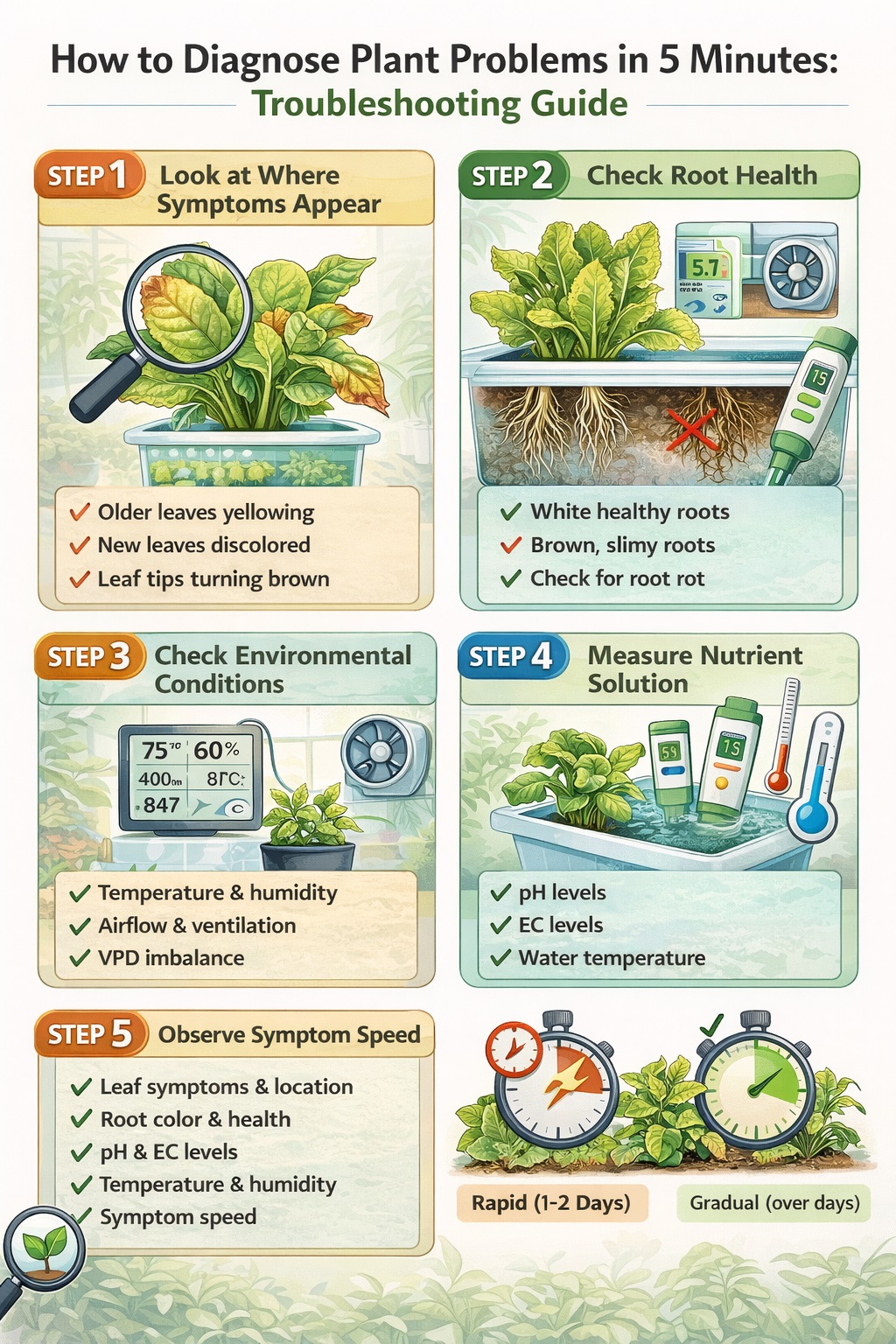
Step 1: Look at Where the Symptoms Appear
The location of symptoms on the plant provides important clues.
- Older leaves affected first often indicates deficiencies of mobile nutrients such as Nitrogen, Magnesium, Potassium. Since these nutrients can move within the plant, they are transported from older leaves to new growth.
- New leaves affected first usually indicates deficiencies of immobile nutrients, including Calcium, Iron, Boron. These nutrients cannot move easily within the plant, so new growth shows symptoms first.
- Leaf tips and edges turning brown often points to Nutrient burn, Tip burn, Salt buildup in the root zone
Step 2: Check Root Health
Roots are the foundation of plant health, especially in hydroponic systems. Healthy roots should be White or light cream colored, Firm and fibrous, Fresh smelling
Warning signs of root problems include Brown or dark roots, Slimy texture, Foul smell, Reduced root growth. These symptoms often indicate Low dissolved oxygen, Root rot pathogens, Excess water temperature, Poor water circulation.
Step 3: Check Your Environmental Conditions
Many plant problems are caused by environmental stress rather than nutrient issues.
Key environmental factors to check include:
- Temperature: Too high temperature closes the, that slows down the photosynthesis. Whereas, Too low temperature slows growth and reduces nutrient uptake.
- Humidity: Very high humidity causes tip burn and edema. Whereas, Very low humidity causes excessive transpiration and plant stress.
- Airflow: Poor airflow can lead to Local humidity pockets, Reduced transpiration, Increased disease risk.
Maintaining balanced temperature, humidity, and airflow keeps plants functioning efficiently.
Step 4: Measure Nutrient Solution Parameters
In hydroponic systems, the nutrient solution must stay within the correct chemical range.
Important parameters include:
- pH: Determines nutrient availability
- Electrical Conductivity (EC) indicates nutrient concentration. High EC increses the risk of nutrient burn. Whereas Low EC causes nutrient deficiency.
- Water Temperature: Higher temperatures reduce oxygen levels in water.
Step 5: Observe the Speed of Symptom Development
The speed at which symptoms appear can also help diagnose the issue.
- Possible causes for Rapid symptoms (within 1–2 days) can be Nutrient burn, Environmental shock, Severe root damage.
- Possible causes for gradual symptoms (over several days) can be Nutrient deficiencies, pH imbalance, and Slow root health decline.
Plant Problem vs Likely Cause (Grower Cheat Sheet)
Many plant issues show similar symptoms, which can confuse growers. The table below helps quickly identify the most likely cause based on visible symptoms.
Plant Stress Quick Reference Guide
| Plant Symptom | Most Likely Cause | Why It Happens | What Growers Should Check |
|---|---|---|---|
| Leaf tips turning brown | Nutrient burn | Excess nutrients cause salt buildup in plant tissue | Check EC levels and nutrient concentration |
| Leaf edges drying or curling | Tip burn or calcium transport issue | Calcium cannot reach rapidly growing leaves | Check humidity, airflow, and calcium levels |
| Yellow leaves with green veins | Iron deficiency (chlorosis) | Iron becomes unavailable when pH is too high | Check pH level of nutrient solution |
| Entire plant turning pale green | Nitrogen deficiency | Nitrogen shortage reduces chlorophyll production | Review nutrient dosing and nutrient balance |
| Leaves wilting despite water availability | Root oxygen deficiency | Roots cannot respire without sufficient oxygen | Check dissolved oxygen and water circulation |
| Small bumps or blisters on leaves | Edema | Plants absorb water faster than they transpire | Improve airflow and reduce humidity |
| Rapid vertical stem growth in leafy crops | Bolting | Temperature or light stress triggers flowering | Check temperature and harvest timing |
| Brown or slimy roots | Root rot | Pathogens develop in low oxygen conditions | Check water temperature and root oxygenation |
| Leaves curling downward | Excess nutrients or water stress | Plants respond to osmotic imbalance | Check EC and irrigation schedule |
Early Warning Signs Plants Show Before Major Problems
Plants often show subtle signals before serious diseases or nutrient problems appear. Recognizing these early signs allows growers to fix conditions before crops are damaged.
Slight Leaf Curling
Mild curling of leaves is often one of the first indicators that the plant is experiencing stress. Possible causes include:
- High nutrient concentration
- Temperature stress
- Water imbalance
- Excess light intensity
Early intervention usually prevents further damage.
Slow Growth Despite Healthy Appearance
Sometimes plants may look healthy but grow much slower than expected. This can indicate:
- Nutrient imbalance
- Low root oxygen levels
- Improper pH affecting nutrient uptake
- Suboptimal temperature
Monitoring growth rate is just as important as observing leaf color.
Leaves Losing Natural Shine
Healthy leaves usually have a slightly glossy surface due to active metabolism and good hydration. When plants begin to lose this shine, it can indicate:
- Reduced photosynthesis
- Nutrient imbalance
- Early dehydration stress
- Stomatal closure
This symptom often appears before visible discoloration occurs.
Slight Yellowing Between Veins
Very light yellowing between leaf veins can indicate early nutrient issues such as:
- Iron deficiency
- Magnesium deficiency
- Nutrient lockout due to incorrect pH
Addressing the problem early can prevent widespread chlorosis across the plant.
Plant Stress Diagnosis Flowchart (Quick Grower Guide)
When plants show signs of stress, many growers immediately change nutrients or add fertilizers. However, plant problems are often caused by environmental conditions or root health issues rather than nutrient deficiencies. This simple decision flow can help growers identify the root cause more efficiently.
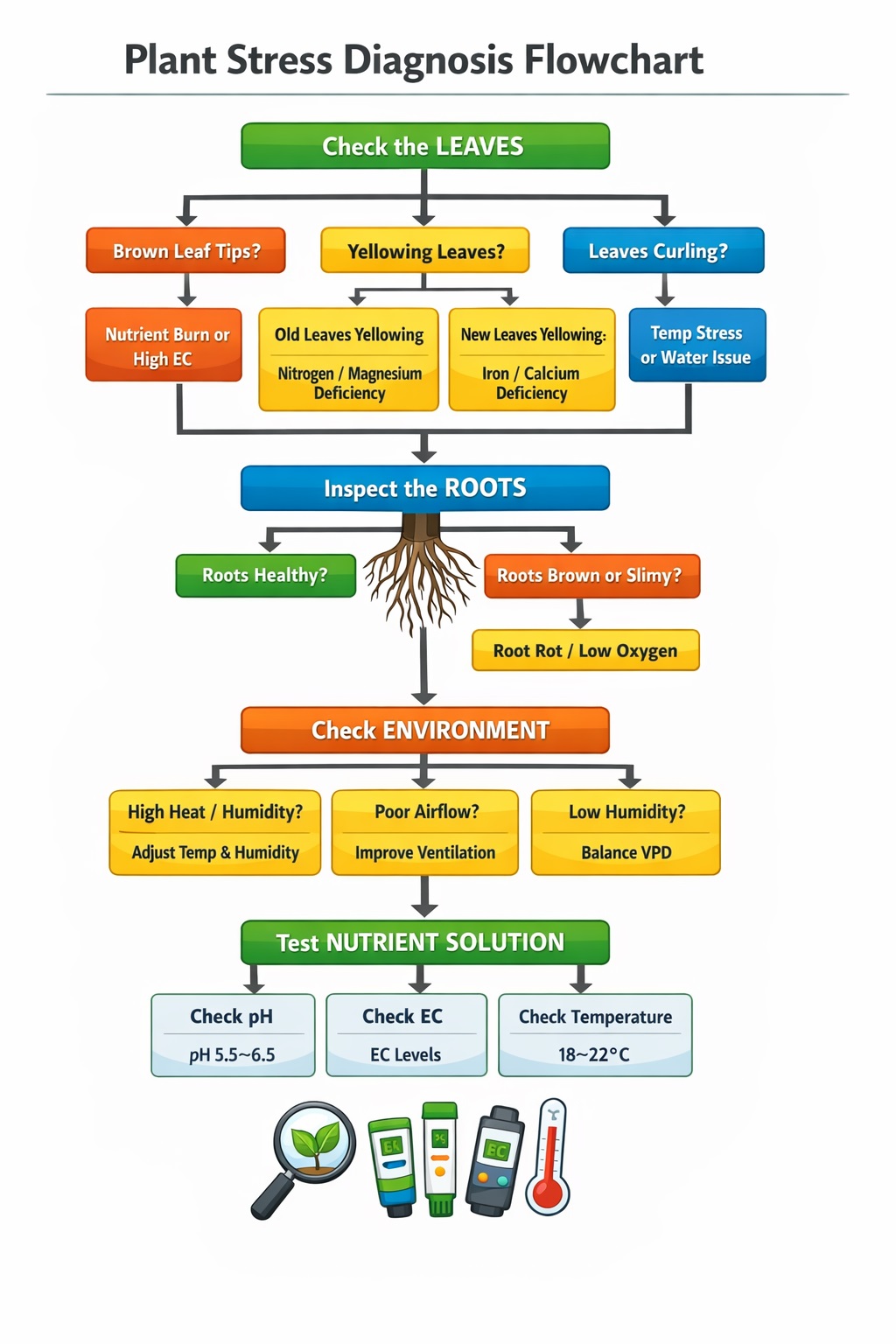
Step 1: Observe the Leaves
Start by carefully examining the leaves.
Are leaf tips turning brown?
Possible causes can be Nutrient burn, Excess EC in nutrient solution, or Salt buildup in root zone.
Action:
Check EC levels and consider flushing the system with fresh water.
Are leaves yellowing?
Next question:
- Older leaves turning yellow first → likely nitrogen or magnesium deficiency
- New leaves turning yellow first → possible iron or calcium deficiency
Action:
Measure pH and nutrient balance.
Are leaves curling or folding?
Possible causes can be Temperature stress, High nutrient concentration, Water imbalance, or Early environmental stress.
Action:
Check temperature, humidity, and irrigation levels.
Step 2: Inspect the Roots
Healthy roots are essential for nutrient uptake. Healthy roots should be White or cream colored, Firm and fibrous, Free from odor.
If roots appear brown, slimy, or smell unpleasant, possible causes include Root rot pathogens, Low dissolved oxygen, High water temperature
Action:
Improve aeration, circulation, and root zone temperature.
Step 3: Check Environmental Conditions
If leaves and roots appear mostly healthy, environmental factors may be responsible. Check the following:
Temperature
- Too high Temperature → stomata close and growth slows
- Too low Temperature → nutrient uptake decreases
Humidity
- Very high humidity → tip burn and edema
- Very low humidity → excessive transpiration
Airflow
Poor airflow can create localized humidity pockets and increase disease risk.
Step 4: Measure Nutrient Solution Parameters
Finally, verify nutrient solution chemistry. Important parameters include:
- pH : Controls nutrient availability
- Electrical Conductivity (EC): Indicates nutrient strength
- High EC → nutrient burn
- Low EC → nutrient deficiency
- Water Temperature: Higher temperatures reduce dissolved oxygen levels
Final Thoughts on Common Plant Problems
Plant health problems rarely occur randomly. Most issues arise when the balance between environmental conditions, nutrient availability, and plant physiology is disturbed. By regularly monitoring key parameters such as pH, Electrical Conductivity (EC), Temperature, Humidity, Air circulation, Root oxygen levels growers can prevent many of these problems before they affect crop productivity.
Successful cultivation comes from understanding how plants respond to stress signals and making small adjustments to keep their environment stable.
Healthy plants constantly maintain a balance between Nutrient uptake, Water movement, Gas exchange, Environmental conditions. When this balance shifts, plants begin sending small warning signals before major problems occur.
Experienced growers learn to observe these early signals and adjust environmental or nutrient conditions before plant health declines. Early diagnosis not only protects plant health but also improves yield, crop quality, and system efficiency.