
When growers calculate Vapor Pressure Deficit (VPD), they usually use air temperature and relative humidity. While this approach works for basic estimations, it ignores an important factor: leaf temperature.
In reality, plants interact with the environment through their leaves, not the surrounding air. Because leaf temperature often differs from air temperature, the true vapor pressure difference driving transpiration may be higher or lower than expected.
What is Leaf Temperature Offset
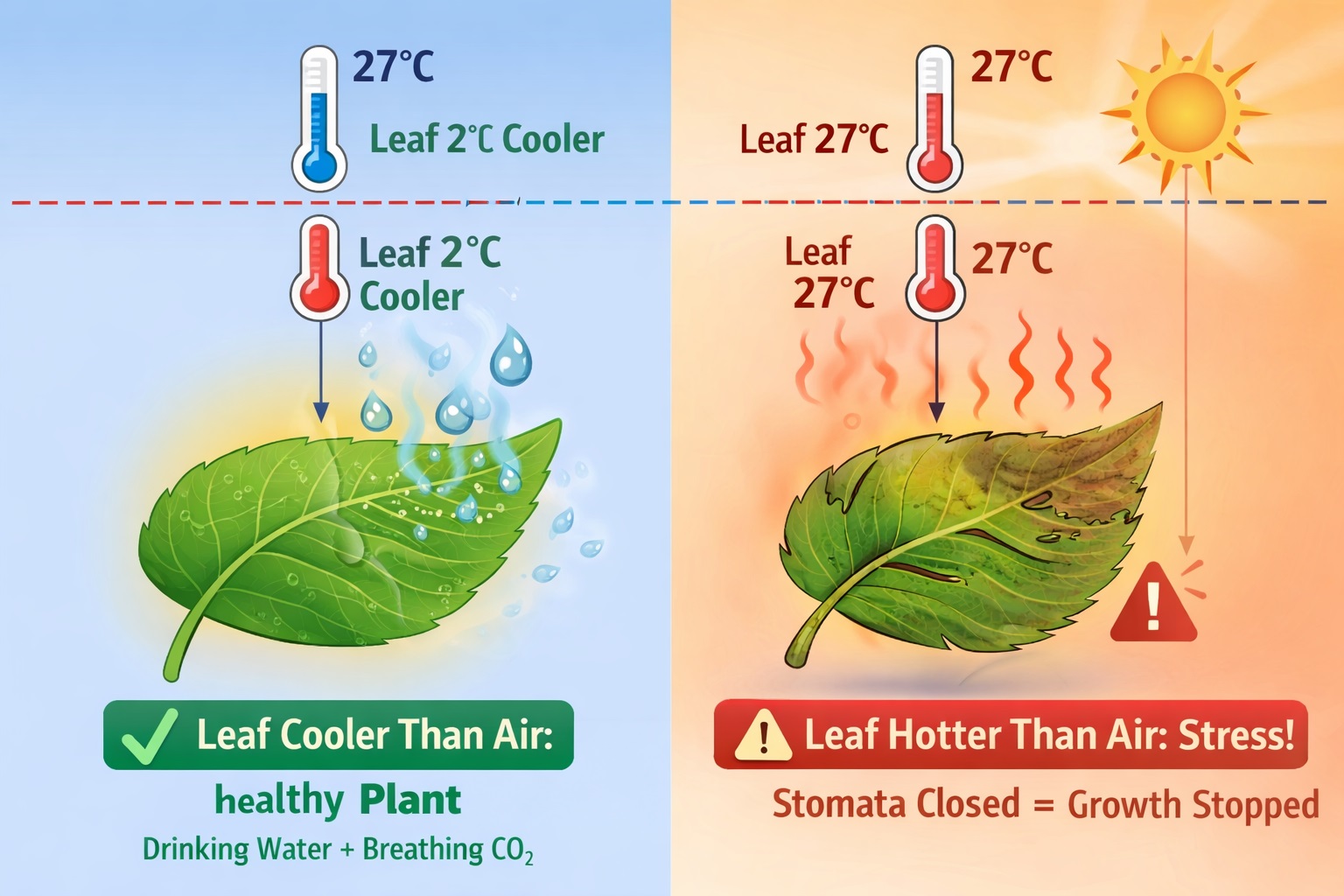
The Leaf Temperature Offset is the difference between the ambient air temperature and the actual temperature of the plant’s leaves. In a well-functioning indoor farm, the offset is usually between -1°C to -3°.
Leaf Temperature Offset = TLeaf – TAir
Where: TAir = Air Temperature, TLeaf = Leaf Temperature
- Negative offset → leaf cooler than air
- Positive offset → leaf warmer than air
Typical Values for Leaf Temperature offset
Leaf Temperature Offset Reference
| Growing Condition | Typical Offset | Plant Status |
|---|---|---|
| High Transpiration | −1°C to −3°C | Cooling Efficiently |
| Moderate Growth | −0.5°C to −1°C | Standard Growth |
| Balanced Environment | ~0°C | Neutral |
| Strong Sunlight / High Light | +1°C to +3°C | Radiant Heating |
| Water Stress | +3°C to +6°C | Critical Warning |
Plants stay cool through a process called Transpiration (essentially plant “sweating”). As water evaporates from the stomata (pores) on the leaf surface, it carries heat away, cooling the leaf.
- The “Cool” Signal: If your leaf is 2°C cooler than the air, it means the plant is drinking water and “breathing” CO2 effectively.
- The “Heat” Warning: If the leaf temperature matches or exceeds the air temperature 0°C or positive offset, the plant has closed its stomata to save water. This stops growth and can lead to heat stress.
Why Leaves Are Not the Same Temperature as Air
Leaves constantly exchange energy with their surroundings through following processes, that changes their temperature:
- Transpiration Cooling
- When water evaporates from leaf stomata, it removes heat from the leaf surface. This process often makes leaves cooler than the surrounding air.
- Solar Radiation
- Direct sunlight can heat leaves faster than the surrounding air. In strong light, leaves may become warmer than air temperature.
- Grow Lights
- High Intensity (HPS/Strong LED) lights emit infrared radiation that warms the leaf surface. Under very intense lights, your offset might be -1°C or even 0°C because the light is heating the leaf faster than the plant can cool itself.
- High-quality LEDs (Best Grow Lights for Hydroponics by Grow Yukti) run cooler, allowing the plant to maintain a healthy -2°C offset.
- Air Movement
- Wind or ventilation helps remove heat from leaf surfaces, reducing temperature differences.
- Plant Stress
- When plants close stomata during stress, transpiration decreases. Less evaporative cooling causes leaves to heat up quickly.
- Root Health
- If the roots are diseased (root rot) or the water is too salty (high EC), the plant cannot pull enough water to cool itself. The leaf temperature will rise, and the offset will move toward 0°C.
Leaf Offset Measurements
Leaf offset is the difference between leaf temperature and surrounding air temperature, indicating how efficiently a plant is transpiring and regulating its internal water balance.
Leaf Temperature Measurement Sensor
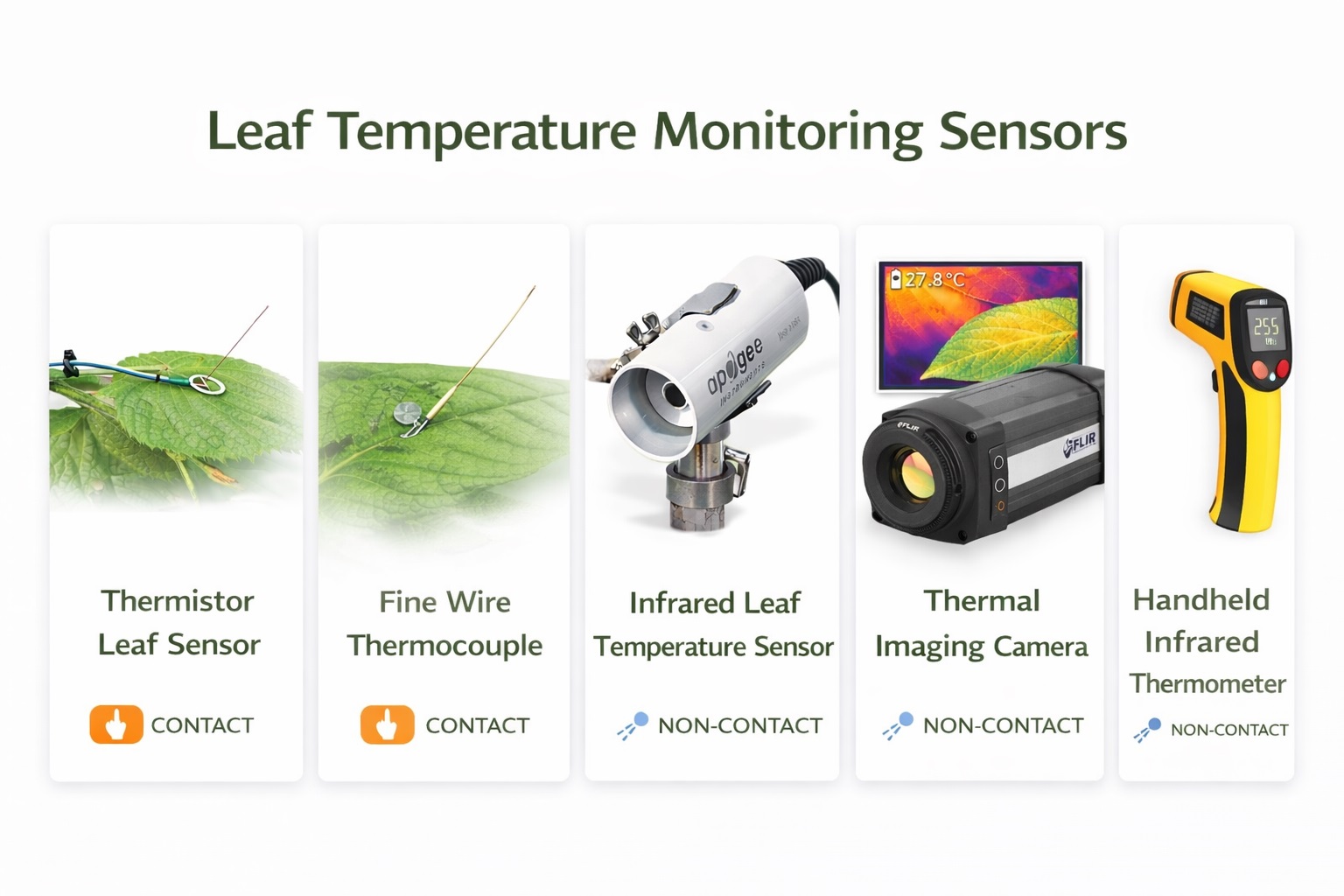
Leaf temperature can be measured using:
- Thermistor Leaf Temperature Sensor: A small contact sensor placed directly on the leaf surface to measure leaf temperature accurately. It is commonly used in plant physiology studies.
- Thermal Imaging Camera: A thermal imaging camera that captures temperature variations across plant leaves and canopy, useful for detecting plant stress and transpiration patterns.
- Infrared Leaf Temperature Sensor: A non-contact infrared sensor that measures leaf surface temperature by detecting infrared radiation emitted from the leaf.
- Leaf Temperature Micro Sensor: A high-precision micro probe used in laboratory or plant physiology research to measure temperature at a very small area of the leaf.
These sensors detect infrared radiation emitted by leaves to estimate surface temperature.
Leaf Temperature Sensor Pricing (India)
| Sensor Technology | Estimated Price (INR) | Ideal Application |
|---|---|---|
| Handheld Infrared Thermometer | ₹900 – ₹7,000 | Manual spot checking for growers |
| Fixed Infrared Leaf Sensor | ₹15,000 – ₹60,000 | Automated greenhouse climate monitoring |
| Leaf Contact Thermistor / Thermocouple | ₹1,500 – ₹15,000 | IoT plant monitoring systems |
| Thermal Imaging Camera | ₹35,000 – ₹4,50,000+ | Plant stress detection & canopy mapping |
| Fine-Wire Thermocouple Probe | ₹8,000 – ₹60,000 | Plant physiology research & lab measurements |
How to Measure Leaf Temperature for Accurate VPD Calculations?
For reliable VPD calculations and plant stress monitoring, it is important to measure leaf temperature and air temperature accurately. Instead of estimating leaf temperature, use a dedicated sensor to collect real data.
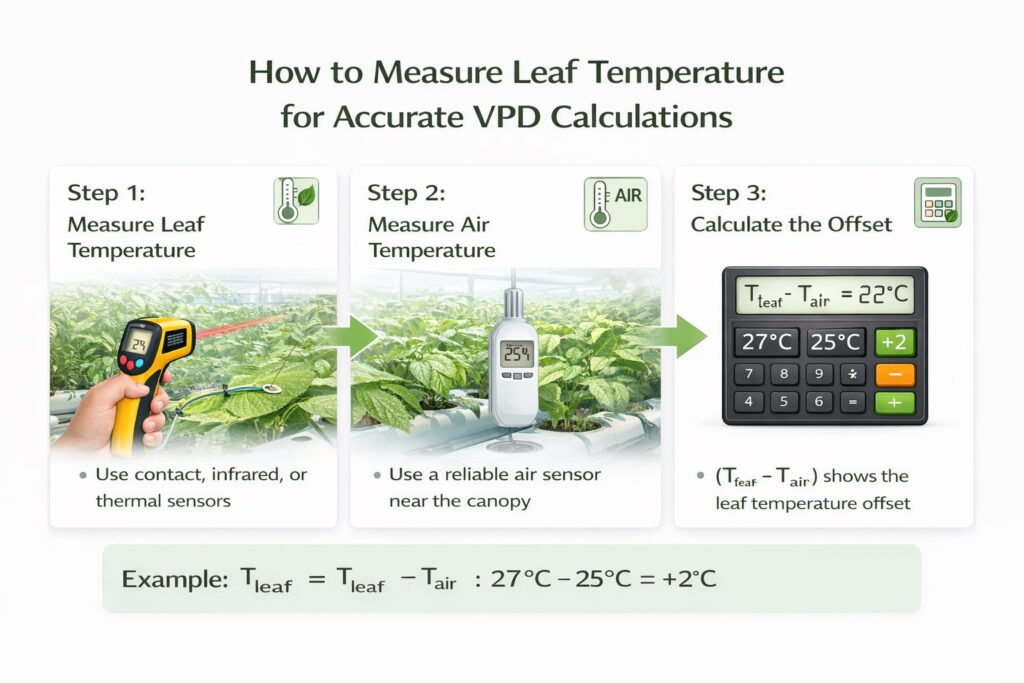
Step 1: Measure Leaf Temperature
Use a leaf temperature sensor to measure the temperature of several leaves within the plant canopy.
- Contact sensors (thermistor or thermocouple): Attach the sensor gently to the surface of a healthy leaf.
- Infrared sensors or handheld IR thermometers: Point the sensor toward the leaf surface from the recommended distance.
- Thermal cameras: Capture an image of the canopy and read the temperature of multiple leaves.
For reliable data, measure several leaves from the center of the canopy and calculate the average leaf temperature.
Step 2: Measure Air Temperature
Next, measure the air temperature around the plant canopy. Use air temperature sensor that is not directly exposed to light or heat sources to ensures the reading reflects the true ambient growing conditions.
Step 3: Calculate the Leaf Temperature Offset
The difference between leaf temperature and air temperature is called the Leaf Temperature Offset.
Practical Tip for Reliable Measurements
For consistent results:
- Measure multiple leaves rather than a single leaf.
- Avoid measuring sunlit leaves only; include shaded canopy leaves.
- Take measurements at plant canopy height where most transpiration occurs.
Lighting and Leaf Offset
Your lighting type changes the “Surface Temperature” of your plants. Use this cheat sheet to set the correct Leaf Offset in the Grow Yukti Dashboard.
Lighting & Leaf Offset Cheat Sheet
| Lighting Type | Typical Offset | The "Why" |
|---|---|---|
|
Professional LED (Grow Yukti Recommended) |
-2°C to -3°C | Low IR heat. Plants stay naturally cooler than the ambient air. |
| Fluorescent (T5) | -1°C to -2°C | Low heat output; ideal for propagation and nursery stages. |
|
Natural Sunlight (Greenhouse/Windowsill) |
0°C to -1°C | Direct IR energy from the sun heats the leaf surface rapidly. |
| HPS / HID Lamps | 0°C to +1°C | Bulbs act as heaters; leaves often become warmer than the air. |
| Low-Quality LED | -1°C | Inefficient drivers and heat sinks radiate heat onto the canopy. |
Pro Tip: If your plant is wilting despite an "Optimal" VPD reading, your leaf is likely hotter than estimated. Try moving your offset closer to 0°C.
Managing Leaf Temperature
Leaf temperature plays a critical role in plant physiology because it directly influences transpiration, photosynthesis, nutrient uptake, and plant stress levels. While growers often monitor air temperature, the plant actually responds to the microclimate around the leaf surface.
Signs of Too high Leaf Temperature
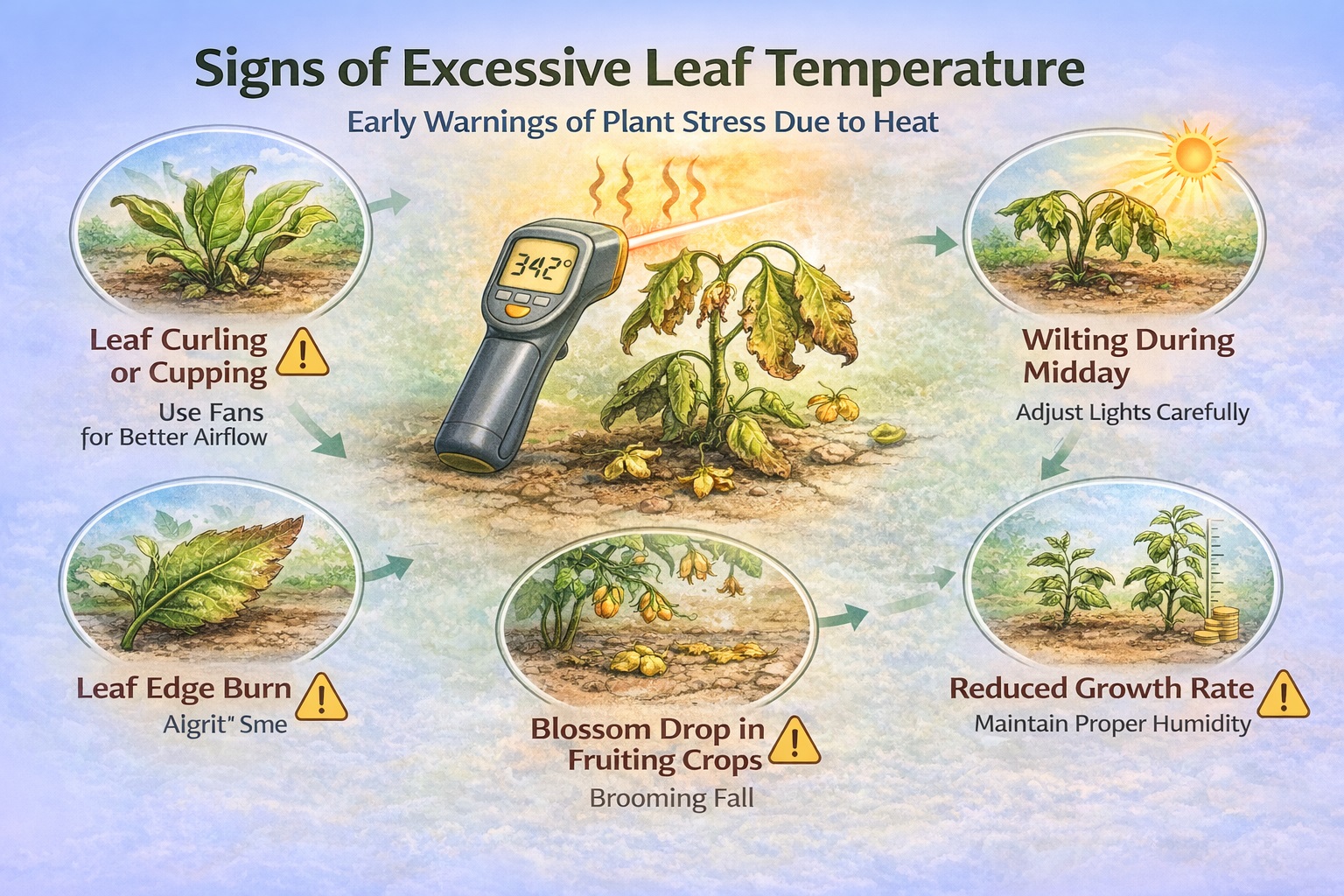
Excessively high leaf temperature often indicates that plants are experiencing stress. Early signs of high leaf temperature are:
- Leaf curling or cupping
- Wilting during midday
- Leaf edge burn
- Reduced growth rate
- Blossom drop in fruiting crops
Monitoring leaf temperature can help identify these problems before they significantly affect plant productivity.
How to Manage Leaf Temperature
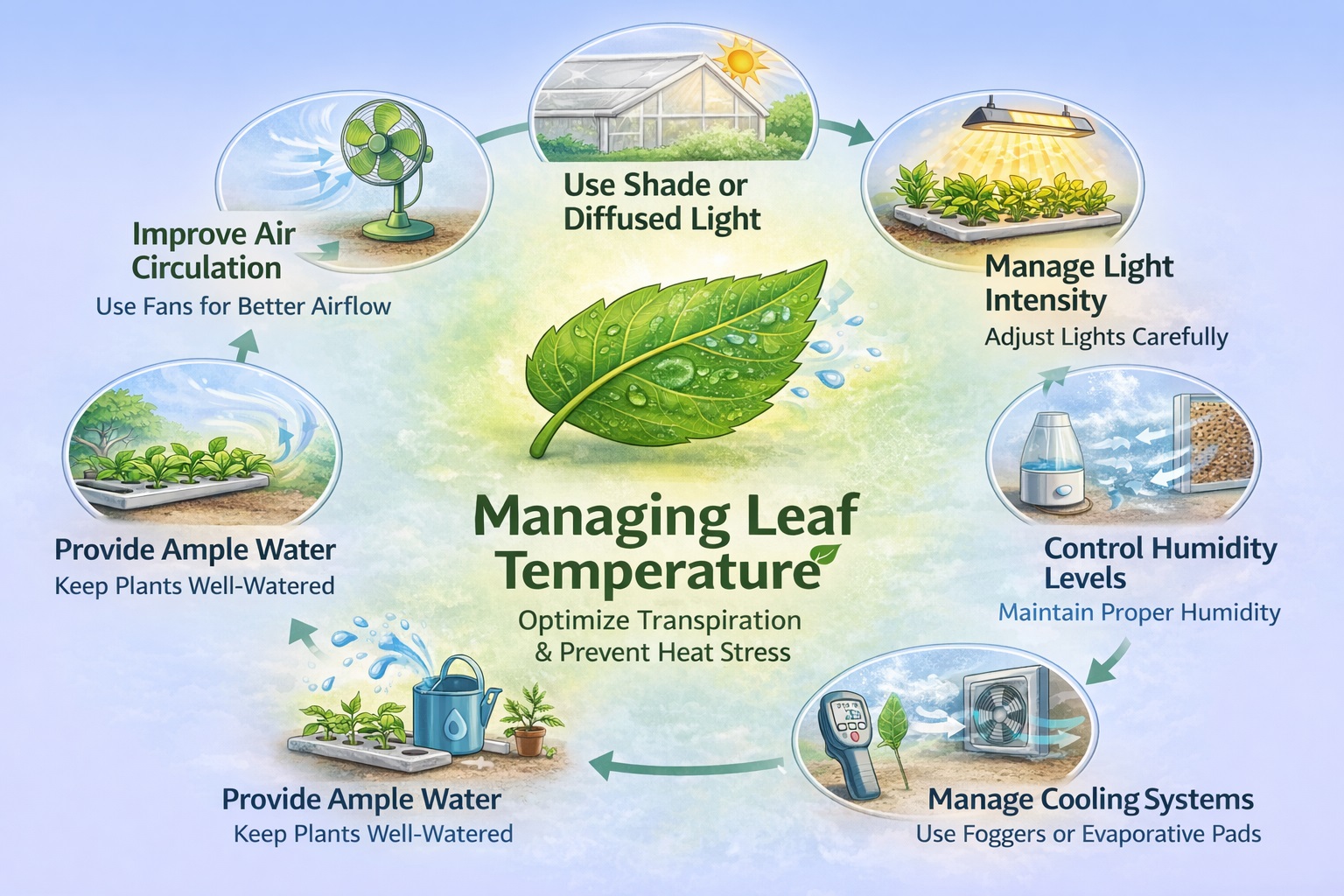
- Improve Air Circulation: Air movement is one of the most effective ways to regulate leaf temperature. Proper airflow remove this boundary layer of warm air and allows cooler air to contact the leaf surface. It reduces leaf temperature buildup.
- Manage Light Intensity: Light is a major driver of leaf temperature because leaves absorb a portion of incoming radiation and convert it into heat. To prevent overheating Use adjustable lighting intensity and maintain proper distance between lights and canopy. Managing light intensity helps maintain optimal leaf temperature while still supporting strong photosynthesis.
- Control Humidity Levels: Humidity directly affects transpiration and leaf cooling. When humidity is extremely low, plants transpire rapidly. On the other hand, when humidity is too high, transpiration slows down. Maintaining balanced humidity helps stabilize leaf temperature.
- Ensure Adequate Water Availability: Transpiration relies on a continuous supply of water from the roots. If the root zone does not supply sufficient water, plants will close their stomata to conserve moisture.
- Use Shading or Diffused Light: Direct sunlight can create localized hot spots on leaves. Shading systems or diffused greenhouse coverings help distribute light more evenly and reduce extreme heating of leaf surfaces.
- Manage Cooling Systems: In controlled agriculture environments, cooling systems can play a major role in maintaining proper leaf temperatures.