
Hydroponics is a method of growing plants using a nutrient-rich water solution instead of traditional soil. In a Hydroponics system, we deliver vitamins and minerals directly to the water. For beginners, the most common question is: “What are the hydroponics plant growth stages from seed to harvest?”
This guide explains the complete hydroponic plant growth stages, step by step, in a simple and beginner-friendly way.
Overview: Hydroponic Growth Stages at a Glance
Hydroponics has mainly 6 stages and each stage timeline depends on crop. The values in below table are for indicative purpose only.
| Stage | Name | Typical Duration |
|---|---|---|
| 1 | Seed Germination | 3 to 7 Days |
| 2 | Seedling Stage | 7 to 14 Days |
| 3 | Transplanting | 1 to 2 Days |
| 4 | Vegetative Growth | 15 to 30 Days |
| 5 | Flowering / Fruiting (if applicable) | 20 to 40 Days |
| 6 | Harvesting | Varies |
Stage 1: Seed Germination
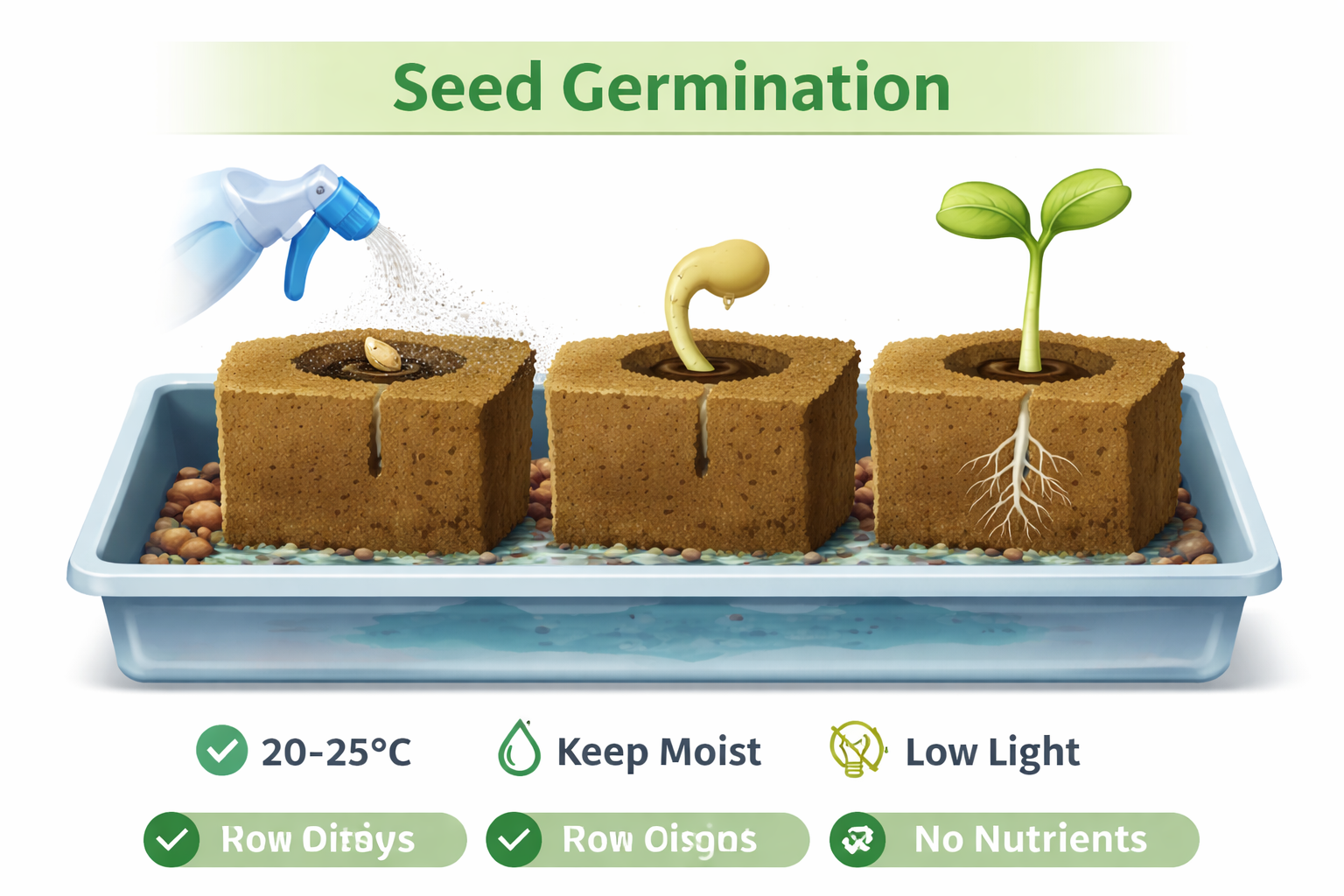
Seed germination is the first and most critical stage in hydroponics.
What happens during seed Germination stage?
- Seeds absorb moisture
- The seed coat breaks
- A small root (radicle) emerges
How to germinate seeds for hydroponics:
- Use coco peat, rock wool, or seed starter plugs
- Keep the medium moist (not flooded)
- Maintain temperature between 20–25°C
- Place in indirect light or low light
Beginner tips:
- Do not add nutrients at this stage
- Avoid overwatering
- Use clean, disease-free seeds
- Beginners often struggle with darkness. Most seeds need a dark, humid environment for the first 48–72 hours before being moved to light.
⏱️ Germination usually takes 3–7 days depending on crop.
Stage 2: Seedling Stage
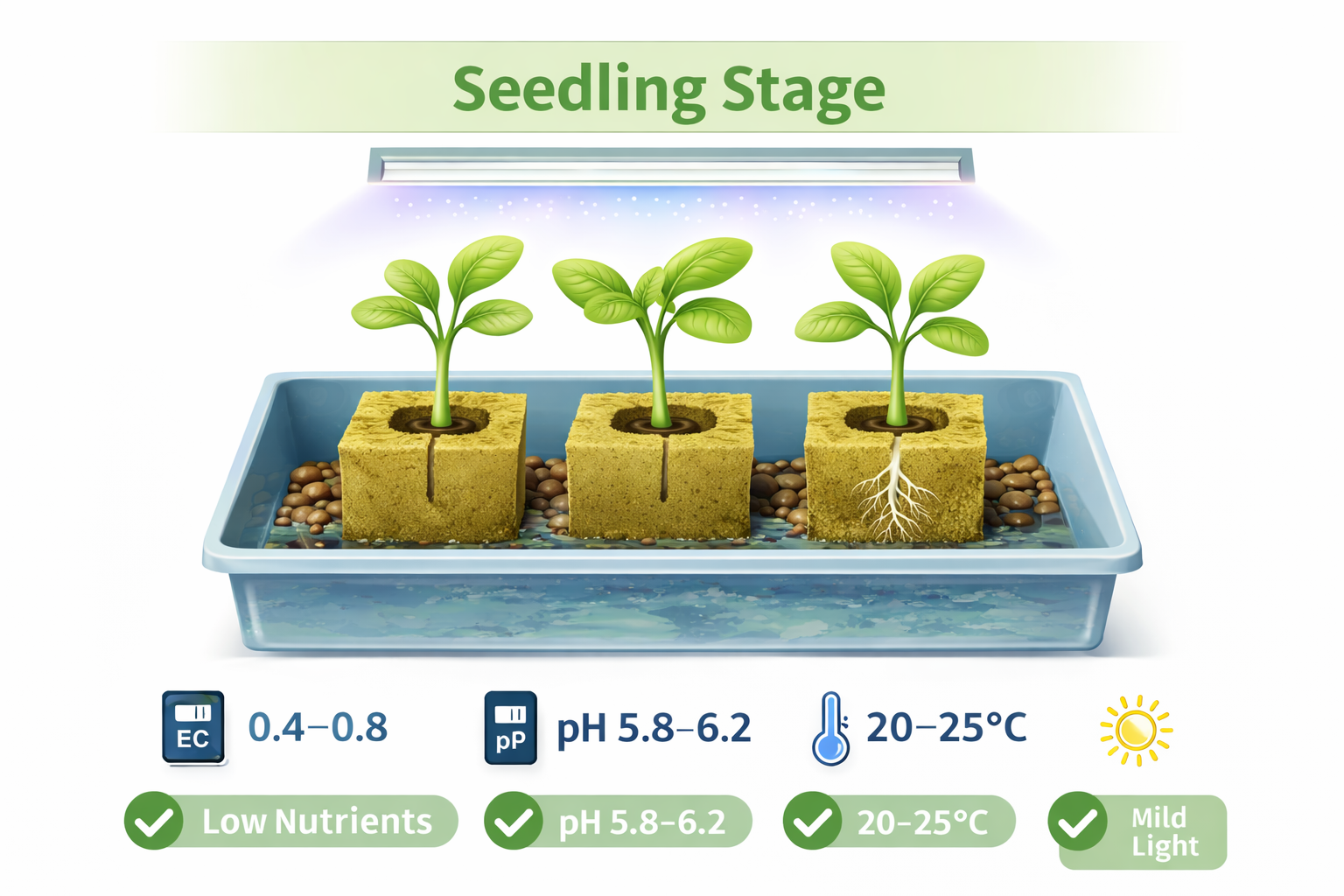
Once the seed sprouts, it enters the seedling stage.
Key characteristics of seedling stage:
- First true leaves appear
- Roots start growing rapidly
- Plant becomes sensitive to stress
Care during seedling stage:
- Provide mild light (natural or grow light)
- Use very low-strength nutrient solution (EC 0.4–0.8)
- Maintain pH between 5.8–6.2
Common mistakes:
- High nutrient concentration
- Direct harsh sunlight
- Drying out the growing medium
 This stage lasts about 7–14 days depending on the crop.
Stage 3: Transplanting to Hydroponic System
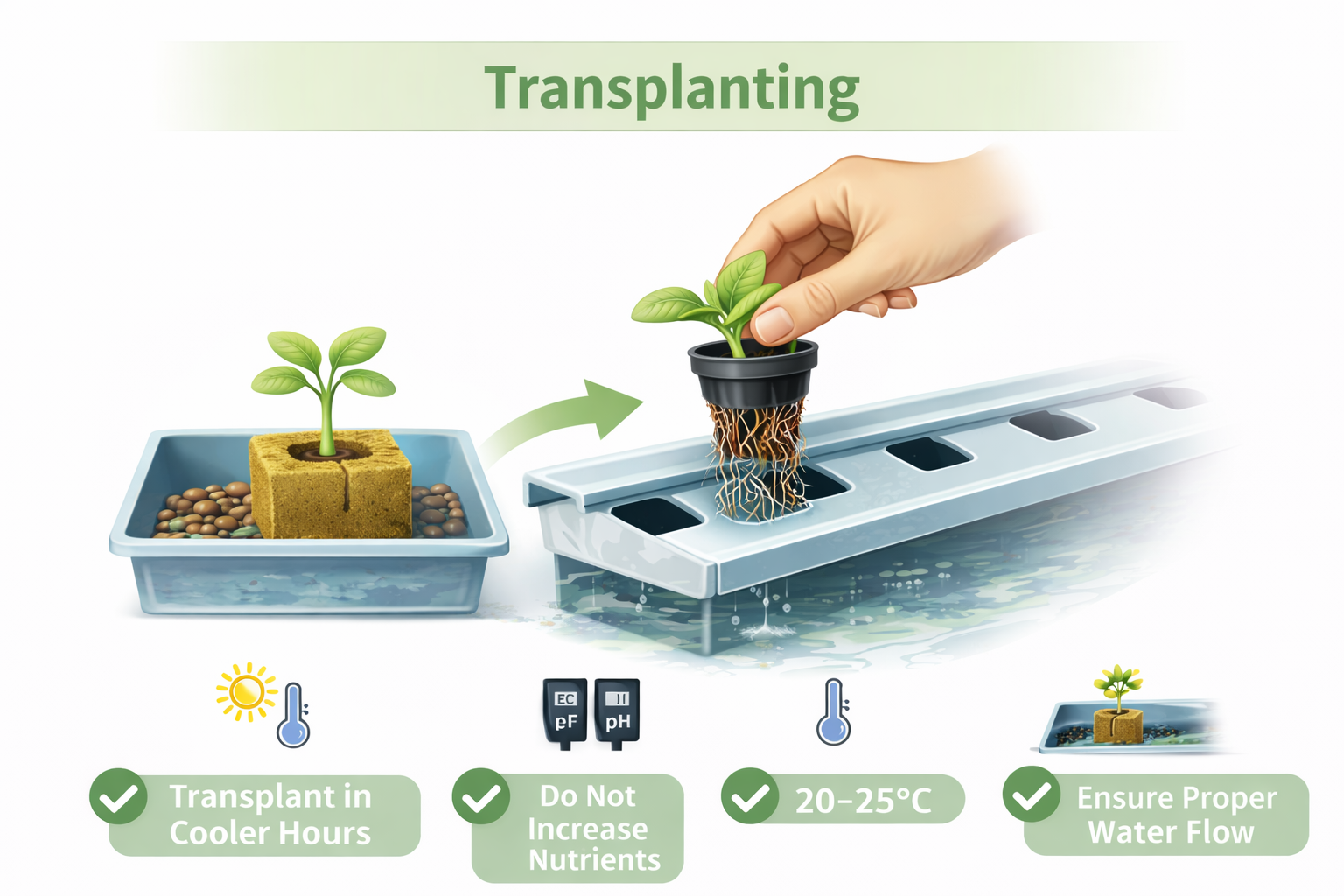
When seedlings have 2–3 true leaves, they are ready to move into the main hydroponic system.
What to do during transferring hydroponics plants:
- Place seedlings into net pots
- Ensure roots can access the nutrient flow
- Avoid damaging delicate roots
Beginner Tips:
- Transplant during cooler hours.
- Do not increase nutrients immediately.
- Ensure proper water flow (especially in NFT systems).
- “Hardening Off”—Gradually expose nursery seedlings to the stronger light of the main system to avoid “transplant shock.”
This stage helps plants adapt from static moisture to flowing nutrients.
Stage 4: Vegetative Growth Stage
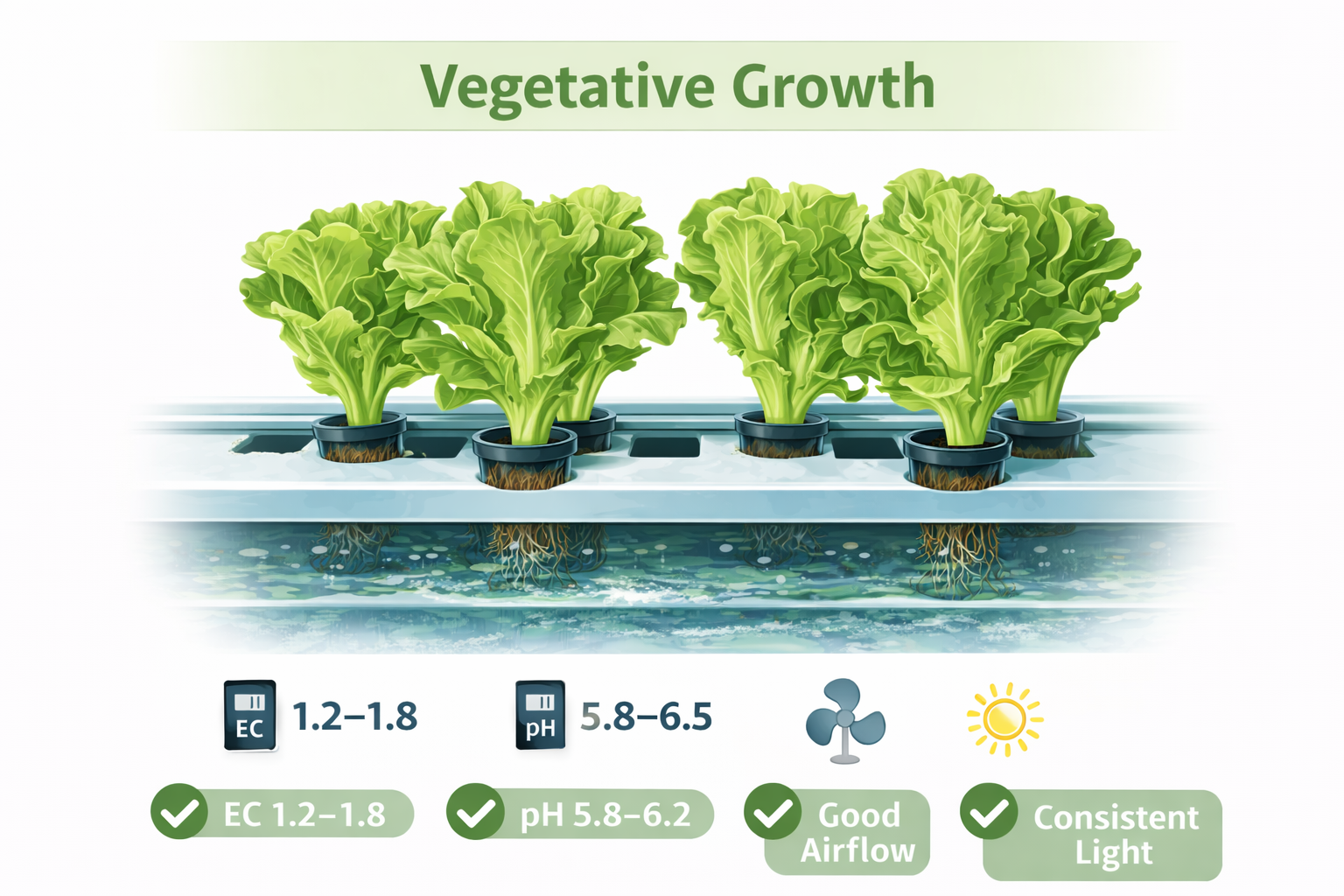
Vegetative growth stage is fastest growth stage in hydroponics. “During this, nutrient levels can drop quickly. This is where Grow Yukti’s Smart Sensors come in—they monitor your water 24/7 so you never have to worry about a growth stunt.”
What happens in Vegetative growth stage in hydroponics:
- Rapid leaf and stem growth
- Strong root development
- High nutrient uptake
Ideal conditions:
- EC: 1.2–1.8
- pH: 5.8–6.5
- Good airflow and oxygen at roots
- Consistent light (6–8 hours natural light minimum)
Why plants grow faster in hydroponics:
- Nutrients are directly available
- Roots get more oxygen
- No energy wasted searching for food
Vegetative stage lasts 15–30 days for leafy greens.
Stage 5: Flowering and Fruiting Stage (Optional)
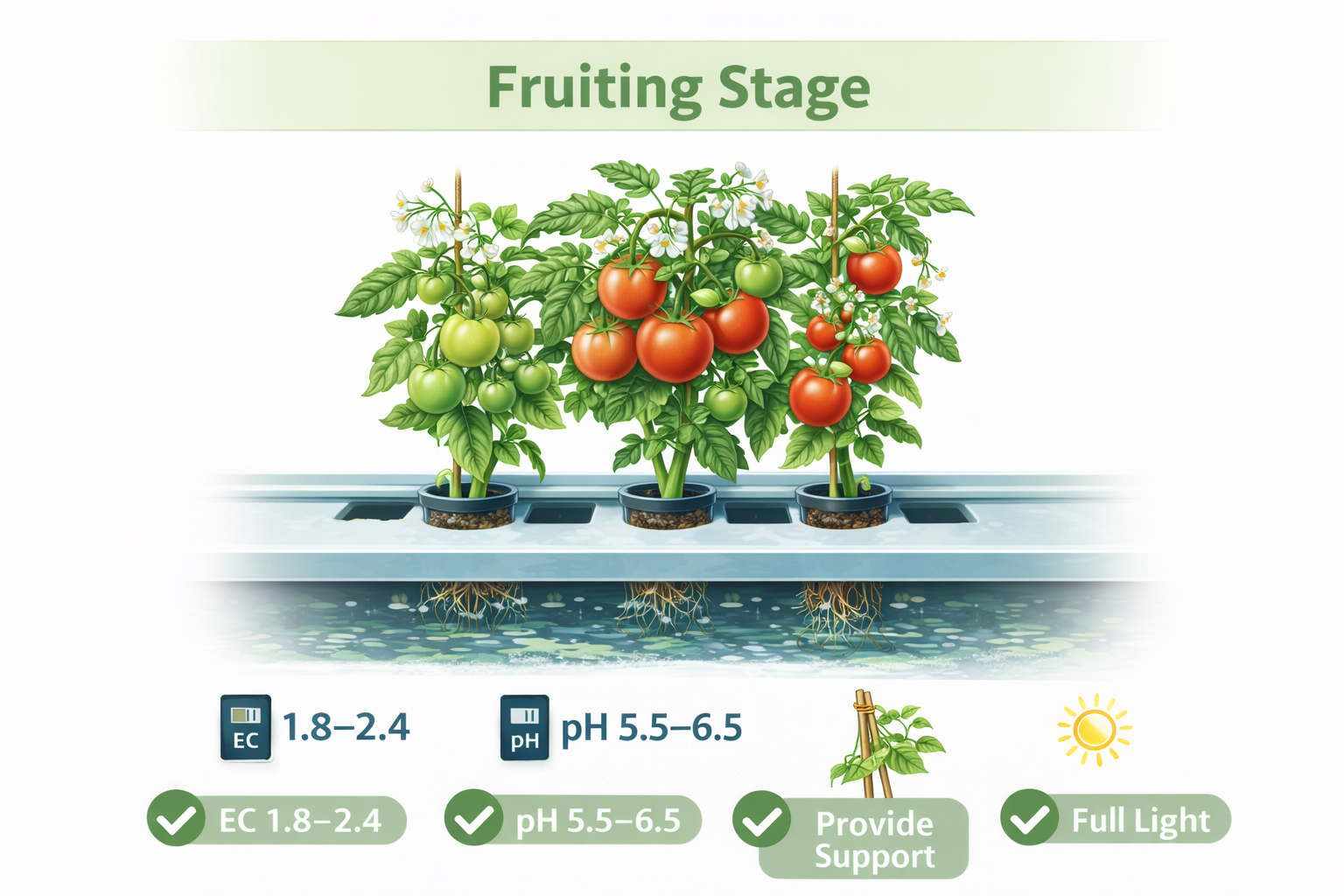
This stage applies only to fruit-bearing plants like tomatoes, cucumbers, or strawberries.
Changes during Flowering and Fruiting stage:
- Flowers begin to form
- Nutrient ratio changes (more potassium & phosphorus)
- Plants require stable temperature and humidity
Key care points during flowering and Fruiting stage:
- Slightly higher EC (1.8–2.5)
- Support pollination (airflow or manual)
- Monitor plants closely for stress
- For indoor or balcony growers in India, natural pollinators (bees) might be missing. Therefore “Manual Pollination” (lightly shaking the plant or using a brush) for tomatoes and peppers is highly recommended.
Leafy vegetables skip this stage and move directly to harvest.
Stage 6: Harvesting Stage
Harvesting is the most rewarding stage in hydroponics and the produce is clean, pesticide-free, and ready to eat.
When to harvest:
- Lettuce: 25–40 days from seed
- Spinach: 30–45 days
- Herbs: Continuous harvesting
- Strawberries: 60–90 days
How to harvest:
- Use clean scissors or knife
- Harvest outer leaves first (for regrowth crops)
- Avoid damaging the root system
- “Flushing”: Some growers run plain water through the system for the last 24–48 hours to improve the taste of the harvest.
How Long Does Hydroponics Take from Seed to Harvest?
| Sr. | Crop | Seed to Harvest Time |
|---|---|---|
| 1 | Lettuce | 25 to 40 Days |
| 2 | Spinach | 30 to 45 Days |
| 3 | Basil | 30 to 50 Days |
| 5 | Strawberry | 60 to 90 Days |
Actual time from seeding to harvest depends on:
- Temperature
- Light
- Nutrient balance
- System design
Common Beginner Mistakes to Avoid
- Adding nutrients too early
- Ignoring pH and EC
- Overcrowding plants
- Poor system cleaning
- Inconsistent water flow
Hydroponics rewards consistency, not complexity.
Why Hydroponics Is Ideal for Beginners
- Faster results
- Less water usage
- Cleaner produce
- Controlled environment
- Perfect for rooftops and urban homes
With proper understanding of each growth stage, hydroponics becomes simple and predictable.
The 30-Day Hydroponic Growth Tracker (Leafy Greens Edition)
| Phase & Days | Daily Activity & Observation | Target Parameters |
|---|---|---|
| Stage 1: Germination Day 1–7 |
Keep seeds in a dark, warm spot. Look for the first "sprouts" (loops) by Day 4 and move to light immediately. | Nutrients: Plain Water Temp: 22-25°C |
| Stage 2: Seedling Day 8–14 |
Wait for "True Leaves." Start very weak nutrients. Ensure roots are staying white and fuzzy. | EC: 0.4 – 0.8 pH: 5.8 – 6.2 |
| Stage 3: Transplant Day 15 |
Move to Net Pots in the main system. Ensure roots touch the water/mist flow. Move during cooler evening hours. | EC: 1.0 pH: 6.0 |
| Stage 4: Vegetative Day 16–28 |
Rapid Growth! Check water levels daily. This is when plants "drink" the most. Inspect for any tiny pests. | EC: 1.2 – 1.8 pH: 5.8 – 6.5 |
| Stage 5: Final Lap Day 29–30 |
The Flush: Run plain pH-balanced water for 24 hours to remove any "salty" taste before eating. | EC: 0.5 (Flush) Ready to Eat! |
Ready to Grow Like a Pro?
Don't let the technical details slow you down. Our Smart Hydroponics Kits take the guesswork out of pH and EC levels, so you can enjoy a bountiful harvest without the stress.
Get Your Custom Grow Plan → Join the Green Revolution with Grow Yukti today!Conclusion
Understanding the hydroponic plant growth stages from seed to harvest is the foundation of successful hydroponic farming.
By following each stage carefully—germination, seedling, vegetative growth, and harvesting—even beginners can grow healthy, high-quality vegetables at home.
Hydroponics is not just farming; it is smart, controlled plant growth.