
Hydroponics allows you to grow a wide variety of crops using water, nutrients, and controlled conditions without soil. However, not all crops behave the same in hydroponic systems. Some are fast, forgiving, and highly profitable, while others demand precision, capital, and experience. This article breaks down different hydroponic crops, grouped by category, and explains:
- Which crops are best suited for hydroponics
- Which hydroponic system works best for each crop
- Growth time, difficulty, and profitability for different crops
- Common mistakes during crop selection
Hydroponic Crop Types
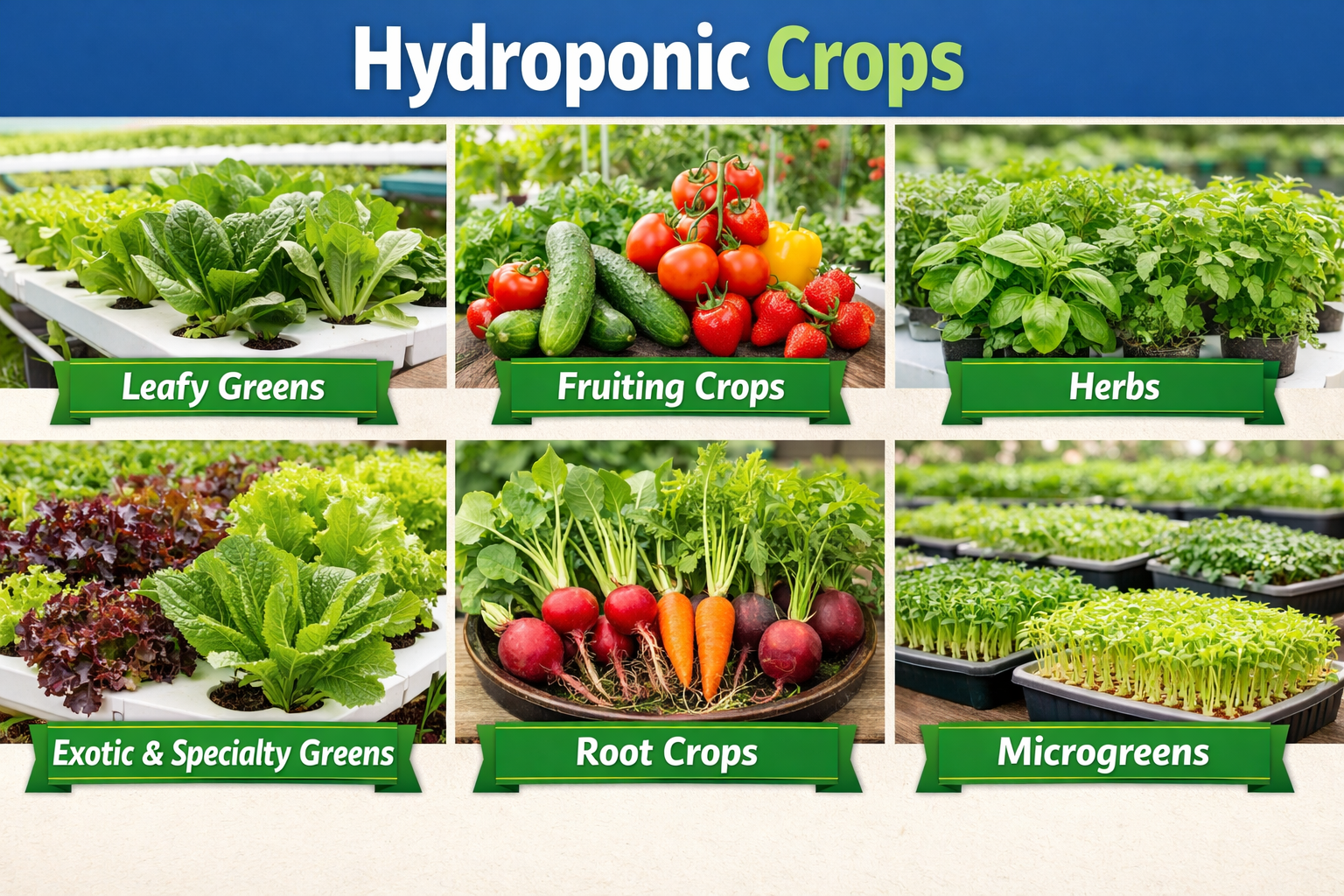
Hydroponic crops can be grouped into different types based on how they grow and what they need.
- Leafy Greens are the easiest and fastest to grow.
- Fruiting Crops need more care but give higher-value harvests.
- Herbs require less space and allow repeated harvesting.
- Exotic and specialty greens are grown for premium markets and need better climate control.
- Root Crops are difficult and mostly experimental in hydroponics.
- Microgreens grow the fastest, need minimal setup, and are ideal for beginners and small-scale indoor farming.
Leafy Greens (Best for Beginners & Commercial Farms)
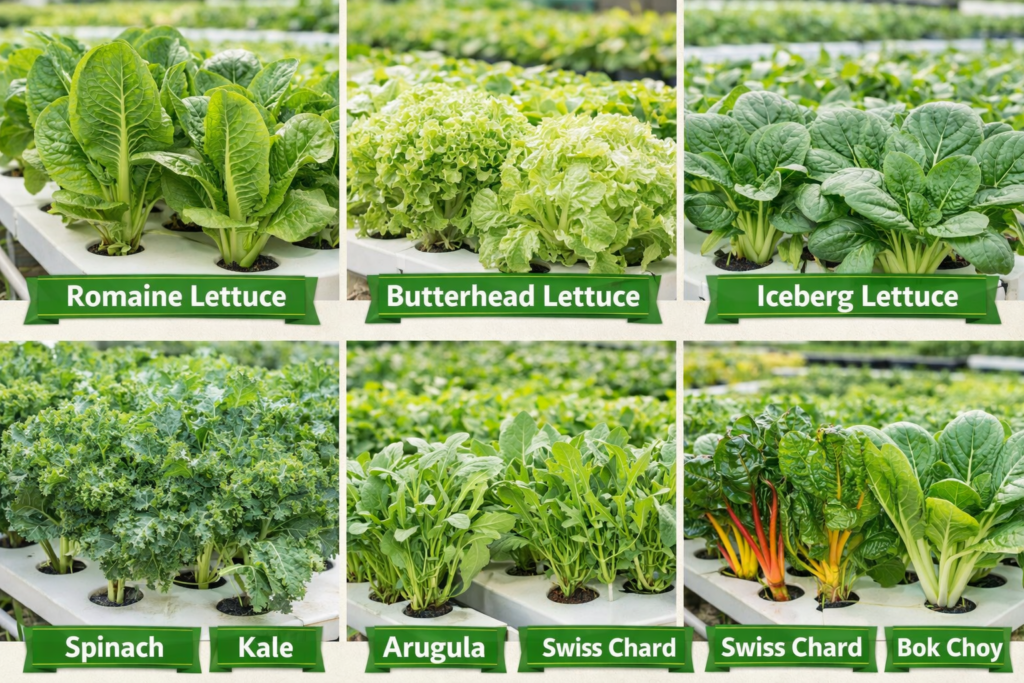
Leafy green crops like Lettuce (Romaine, Butterhead, Iceberg), Spinach, Kale, Arugula, Swiss chard, Bok choy are ideal for hydroponics because they grow fast and need less care. They work well in NFT and DWC systems, give quick harvests, and provide steady yields with low risk.
Recommended Growing Conditions for Leafy Greens
Below is table showing the recommended growing conditions for hydroponic leafy greens.
Success Parameters for Hydroponic Leafy Greens
STANDARD GROWING PARAMETERS
Hydroponic Leafy Greens
| Parameter | Recommended Range | Remarks |
|---|---|---|
| Air Temperature | 15 – 25 °C | Cooler temperatures give better leaf quality |
| Relative Humidity | 50 – 70% | Too high increases disease risk (Tip burn/Blight) |
| Light Requirement | 12 – 16 hours/day | Natural light works well; supplementation if needed |
| Light Intensity | 150 – 300 µmol/m²/s | Excess light causes leaf burn or bolting |
| Parameter | Recommended Range | Remarks |
|---|---|---|
| Nutrient Temp | 18 – 22 °C | Helps maintain good dissolved oxygen (DO) |
| pH Range | 5.5 – 6.5 | Ideal range for maximum nutrient uptake |
| EC Strength | 0.8 – 1.6 mS/cm | Lower requirement than fruiting crops |
| Dissolved Oxygen | >5 mg/L | Critical for root respiration and health |
| Water Flow (NFT) | 1 – 2 L/min | Per channel; ensures thin nutrient film |
| Parameter | Standard Value | Remarks |
|---|---|---|
| Plant Spacing | 6 – 8 inches | Allows airflow and uniform growth |
| Crop Cycle | 25 – 40 days | Depends on variety (Baby leaves vs. Full head) |
Success in hydroponics depends on the stability of these parameters. Small fluctuations in pH or EC can significantly impact yield.
Note: During summer months, maintaining the Nutrient Solution Temperature below 22°C is the most common challenge in tropical climates.
Maintaining stable temperatures and clean nutrient solution is more important than chasing perfect numbers. Leafy greens are forgiving but reward consistency.
Why Leafy Greens Are Ideal for Hydroponics
Leafy greens are widely preferred in hydroponic farming because they are efficient, forgiving, and well-suited to soilless systems. Their natural growth pattern allows them to thrive with minimal inputs while still delivering reliable and repeatable harvests. They are considered excellent choice for both beginners and commercial growers due to following resons.
- Short growth cycle (25–40 days)
- Low nutrient demand
- High tolerance to minor mistakes
- High plant density per square foot
Recommended Hydroponic Systems for Leafy Greens
Leafy greens grow best in simple and efficient hydroponic systems that provide a thin, well-oxygenated flow of nutrient solution to the roots. Following hydroponic systems are recommended for leafy greens:
- NFT (Nutrient Film Technique)
- DWC (Deep Water Culture)
- Floating raft systems
Systems like NFT and DWC are ideal because they support shallow root structures, allow close plant spacing, and maintain consistent moisture and oxygen levels. These systems are easy to manage, cost-effective, and well suited for producing uniform, high-quality leafy greens.
How difficult it is to grow Leafy Green
Growing leafy greens in hydroponics is relatively easy compared to most other crop types. They are forgiving of small mistakes in pH, nutrients, and watering, and they adapt well to simple systems without advanced automation.
Leafy greens is a ideal choice for beginners and large-scale commercial farms because of their fast growth and low maintenance needs, .
Commercial Insight: Growing Leafy Greens for the Indian Market
Leafy greens are the backbone of profitable hydroponics, especially for urban farms, rooftops, and polyhouses. They offer predictable yields and consistent demand from restaurants and retail chains.
1 Sq. Ft. Profit Roadmap for Leafy Greens
Unit of Analysis: 1 Sq. Ft. Area | Currency: INR (₹)
Key Considerations
- Prices assume urban Indian markets
- Yield assumes 8–12 crop cycles/year
- Natural light systems have lower electricity cost
- Direct selling gives 30–50% higher margins
Leafy greens may not give the highest profit per plant, but they deliver the most reliable profit per square foot with the lowest risk, which is why most commercial hydroponic farms start and scale with leafy greens.
Fruiting Crops (High Value, High Attention)
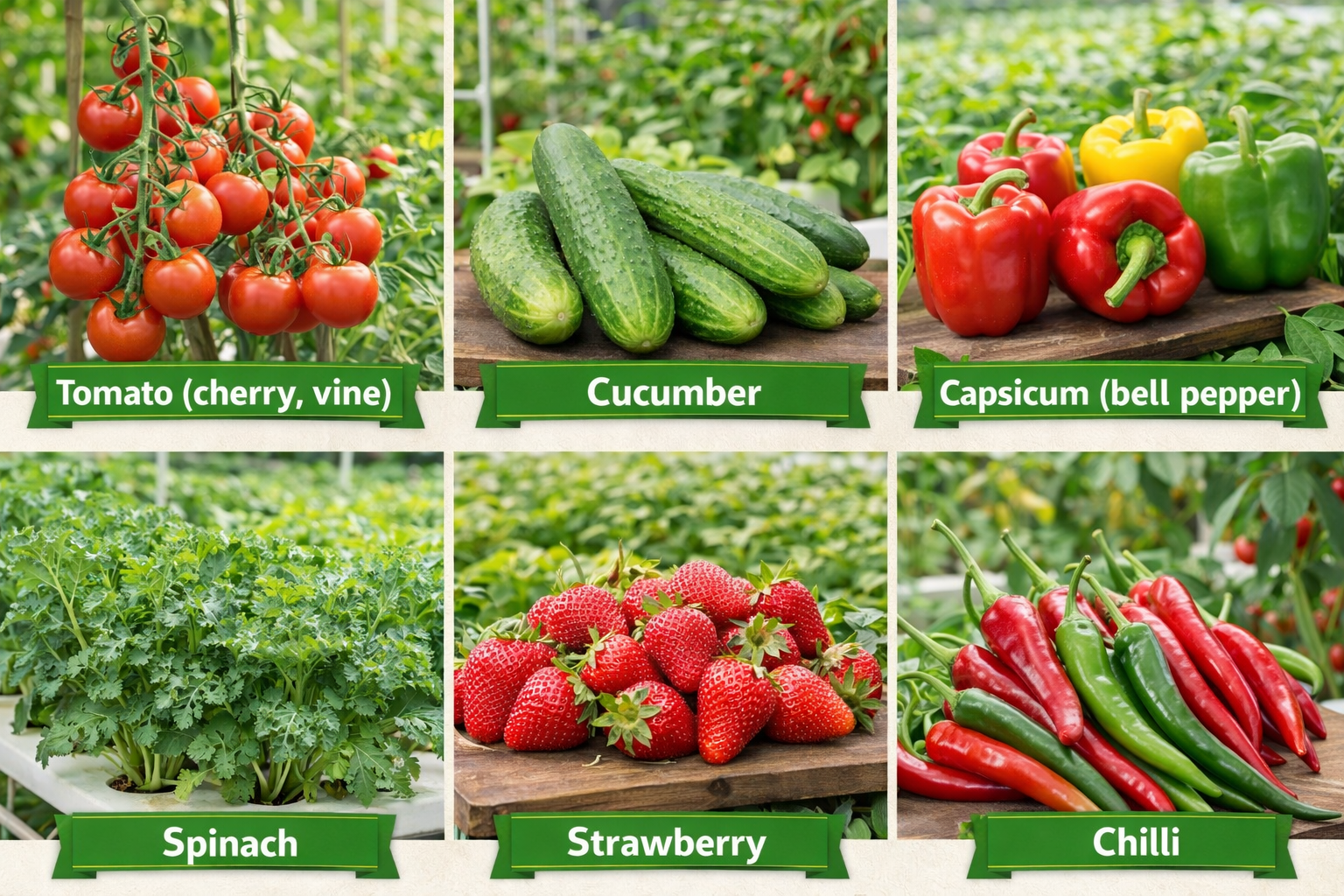
Fruiting crops like tomato, cucumber, capsicum, strawberry, and chilli need more nutrients, support, and regular monitoring. They take longer to grow but give higher value harvests when managed properly.
Recommended Growing Conditions for Fruiting Crops
Here is a clear,table showing the recommended growing conditions for hydroponic fruiting crops.
Success Parameters for Hydroponic Fruiting Crops
STANDARD GROWING PARAMETERS
Hydroponic Fruiting Crops
| Parameter | Recommended Range | Remarks |
|---|---|---|
| Air Temp (Day) | 20 – 30 °C | Crop-specific optimum needed |
| Air Temp (Night) | 16 – 22 °C | Supports flowering and fruit set |
| Relative Humidity | 50 – 70% | High humidity affects pollination |
| Light Intensity | 300 – 600 µmol/m²/s | Strong light improves yield |
| Light Duration | 14 – 18 hours/day | Essential for flowering |
| Parameter | Recommended Range | Remarks |
|---|---|---|
| EC Strength | 2.0 – 3.5 mS/cm | Higher requirement than leafy greens |
| pH Range | 5.8 – 6.5 | Stable pH is critical for uptake |
| Nutrient Temp | 18 – 24 °C | Higher temps reduce oxygen capacity |
| Dissolved Oxygen | >6 mg/L | Important for heavy feeders |
| Parameter | Standard Value | Remarks |
|---|---|---|
| Plant Spacing | 12 – 18 inches | Needed for canopy and airflow |
| Watering Method | Drip / Media-based | Prevents root stress in large plants |
| Crop Cycle | 90 – 150 days | Depends on crop and variety |
Fruiting crops require a much higher nutrient concentration (EC) and significantly more light than leafy greens. Ensuring proper airflow between plants is vital to prevent fungal issues during the flowering stage.
Note: Nighttime temperatures play a crucial role in fruit set; if nights are too warm, plants may drop their flowers.
For fruiting crops, consistency matters more than speed. Stable nutrients, temperature, and airflow directly impact flowering and fruit quality.
Key Characteristics of Fruiting Crops
- Longer growth cycle (60–120 days)
- Higher nutrient and EC requirements
- Sensitive to pH, temperature, and oxygen levels
- Require pruning, training, and support
Recommended Hydroponic Systems for Fruiting Crops
Fruiting crops perform best in hydroponic systems that provide strong root support, higher nutrient availability, and stable moisture levels. Therefore Media based following hydroponic system are best choice to grow fruiting crops.
- Dutch bucket
- Coco-peat grow bags with drip systems
- Deep Media beds
Above hydroponic system are best choice for fruiting crops because they anchor large plants and allow precise nutrient delivery. These systems also support trellising and pruning, making them suitable for long-duration crops like tomatoes, cucumbers, capsicum, and strawberries.
How difficult it is to Grow Fruiting Crops
Growing fruiting crops in hydroponics is more challenging than growing leafy greens because these plants have higher nutrient, water, and environmental demands.
They require precise control of pH and EC, regular pruning and training, proper pollination, and close monitoring of temperature and humidity. Small mistakes can directly affect flowering and fruit quality. This is the reason fruiting crops are recommended to experienced hydroponic gardeners.
Commercial Insight: Growing Fruiting Crops for the Indian Market
Fruiting crops generate higher revenue per plant, but losses can be significant if climate control, nutrient balance, or pollination is mishandled.
1 Sq. Ft. Profit Roadmap for Fruiting Crops
Fruiting Crops: 1 Sq. Ft. Analysis | Currency: INR (₹)
Key Considerations
- Yield is assuming proper trellising and pruning
- They are highly Sensitive to temperature, EC, and calcium balance
- Market price fluctuates more than leafy greens
Fruiting crops can generate higher revenue per plant, but not always higher profit per square foot. They demand more nutrients, labor, time, and skill, and profits vary significantly with climate control and market access. Fruiting crops work best when added after leafy greens stabilize cash flow, not as a first crop.
Herbs (Low Space, High Margin Crops)
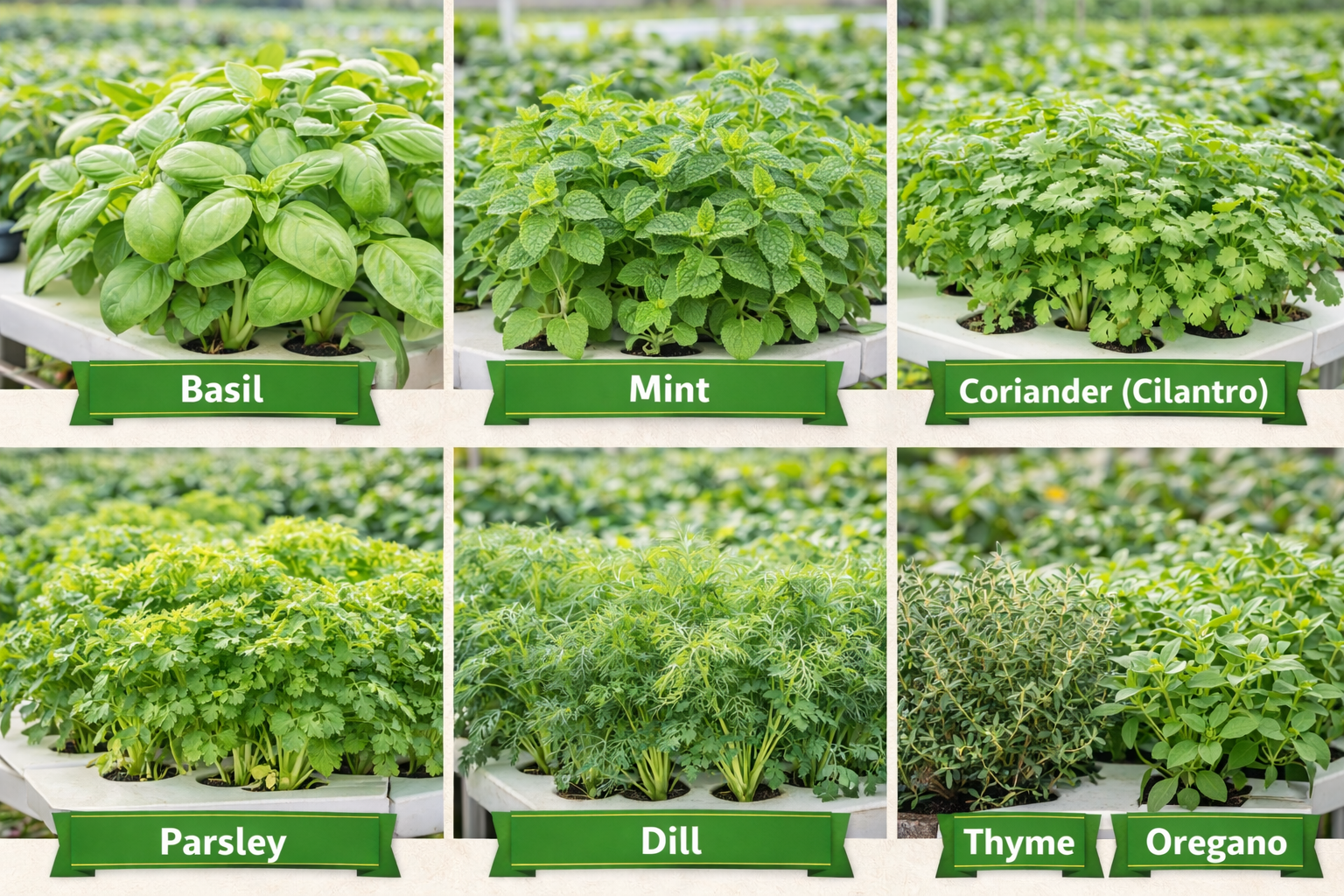
Herbs such as basil, mint, coriander, parsley, dill, thyme, and oregano grow well in hydroponics and can be harvested multiple times. They need less space and offer good profits, especially for restaurants and local markets.
Recommended Growing Conditions for Herbs
Here is the table showing the recommended growing conditions for hydroponic herbs such as basil, mint, coriander, parsley, dill, thyme, and oregano.
Success Parameters for Hydroponic Herbs
STANDARD GROWING PARAMETERS
Hydroponic Herbs | Optimal Conditions
| Parameter | Recommended Range | Remarks |
|---|---|---|
| Air Temperature | 18 – 28 °C | Most herbs prefer mild warmth |
| Relative Humidity | 50 – 70% | High humidity can reduce aroma/flavor |
| Light Duration | 12 – 16 hours/day | Natural or supplemental light |
| Light Intensity | 200 – 400 µmol/m²/s | Excess light may stress plants |
| Parameter | Recommended Range | Remarks |
|---|---|---|
| EC Strength | 1.2 – 2.0 mS/cm | Moderate feeding required |
| pH Range | 5.5 – 6.5 | Suitable for most culinary herbs |
| Nutrient Temp | 18 – 22 °C | Supports healthy root growth |
| Airflow | Good Ventilation | Prevents fungal and mildew issues |
| Parameter | Standard Value | Remarks |
|---|---|---|
| Plant Spacing | 6 – 10 inches | Depends on herb type/bushiness |
| Harvest Method | Cut-and-come-again | Promotes continuous growth |
| Harvest Cycle | 20 – 35 days | First cut, followed by repeated harvests |
Herbs are highly sensitive to their environment; proper airflow and moderate nutrient levels are key to concentrating the essential oils that give them their flavor.
Note: The "Cut-and-come-again" method is highly efficient for herbs like Basil and Mint, allowing for multiple revenue cycles from a single planting.
Regular harvesting and good airflow are key to maintaining flavor, aroma, and leaf quality in hydroponic herbs.
Why Herbs Work Well in Hydroponic System
- Compact plant size
- Strong aroma and taste in hydroponics
- Frequent harvesting (cut-and-come-again)
- High price per kg
Recommended Hydroponic Systems for Herbs
Herbs grow well in hydroponic systems that offer consistent moisture, good root oxygenation, and easy access for frequent harvesting. Therefore following Hydroponic Systems are recommended to grow herbs
These setups are simple to manage, allow high plant density, and make it easy to harvest herbs multiple times without disturbing plant growth.
How difficult it is to grow Herbs with hydroponics
Growing herbs in hydroponics is moderately easy, sitting between leafy greens and fruiting crops in terms of difficulty.
Most herbs are tolerant of small nutrient and pH variations and grow well in simple systems, but they require regular harvesting and good airflow to maintain quality and aroma. With basic monitoring and timely cutting, herbs can be grown successfully even by beginners.
Commercial Insight: Growing Herbs for the Indian Market
Herbs are excellent for restaurants, cloud kitchens, and export-focused farms, but require good post-harvest handling due to short shelf life.
1 Sq. Ft. Profit Roadmap for Herbs
Hydroponic Herbs: 1 Sq. Ft. Analysis | Currency: INR (₹)
Key Constriants in Growing Herbs
- For calculations we assumed B2B Model
- Herbs lose value quickly without cold storage
- Some herbs (coriander) are heat-sensitive
- Frequent harvesting increases labor cost
- You need Consistent buyers
Herbs offer excellent profit per square foot, but only when there is assured and fast market access. Their short shelf life makes them risky for bulk production without committed buyers.
Commercially, herbs perform best as a high-margin add-on crop, not the sole crop in a hydroponic farm.
Exotic & Specialty Greens (Premium Market Crops)
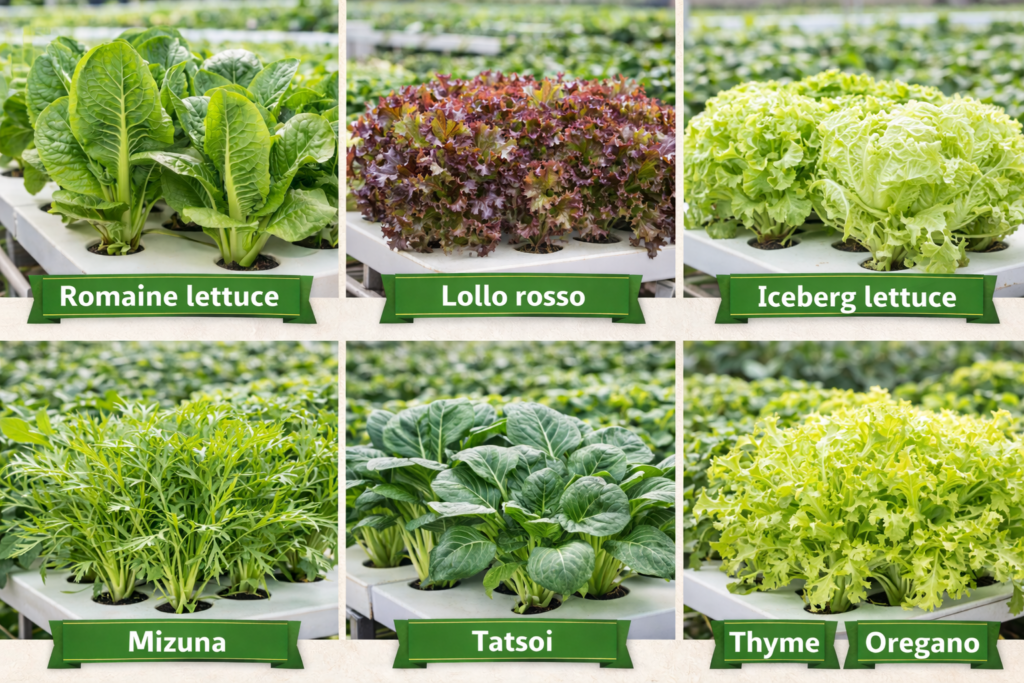
Exotic greens like romaine lettuce, lollo rosso, iceberg lettuce, mizuna, tatsoi, and endive are grown mainly for premium markets. They require better temperature control but provide higher prices than regular leafy greens.
Recommended Growing Conditions for Exotic Green Crops
Here is table showing the recommended growing conditions for hydroponic exotic and specialty greens.
Success Parameters for Hydroponic Exotic Greens
STANDARD GROWING PARAMETERS
Exotic & Specialty Greens | Premium Growth Guide
| Parameter | Recommended Range | Remarks |
|---|---|---|
| Air Temperature | 14 – 24 °C | Cooler conditions improve color and texture |
| Relative Humidity | 50 – 65% | High humidity increases disease risk |
| Light Duration | 12 – 16 hours/day | Consistent daily light is important |
| Light Intensity | 200 – 350 µmol/m²/s | Excess light causes leaf stress/bolting |
| Parameter | Recommended Range | Remarks |
|---|---|---|
| EC Strength | 1.2 – 1.8 mS/cm | Slightly higher than regular greens |
| pH Range | 5.5 – 6.3 | Tight control improves premium leaf quality |
| Nutrient Temp | 18 – 22 °C | Helps maintain high dissolved oxygen |
| Water Flow | 1 – 2 L/min | Ensures uniform nutrient film (NFT) |
| Parameter | Standard Value | Remarks |
|---|---|---|
| Plant Spacing | 8 – 10 inches | Prevents leaf damage during growth |
| Airflow | Moderate, Uniform | Avoids tip burn in specialty varieties |
| Crop Cycle | 30 – 45 days | Highly dependent on specific variety |
Exotic greens are often more sensitive than standard varieties. Maintaining a tighter pH range (5.5 – 6.3) and ensuring uniform airflow are critical for producing the visual quality required for premium retail prices.
Note: Cooler root-zone temperatures are particularly beneficial for red-leafed exotic varieties to develop deep pigmentation.
For exotic greens, temperature control and gentle handling matter more than aggressive feeding—quality determines market price.
Key Characteristics of Exotic Green Crops
- Grown mainly for premium buyers
- Require precise temperature and EC control
- Sensitive to heat stress
Recommended Hydroponic Systems for Exotic Green
Exotic and specialty greens require hydroponic systems that provide stable nutrient delivery and good control over root zone conditions. Therefore following hydroponic system are recommended to grow exotic greens.
- NFT with chilled nutrient solution
NFT systems with temperature management is best choice because they allow precise control of nutrient flow and oxygen levels, which helps maintain leaf quality and uniform growth.
How difficult it is to grow Exotic Green Crops
Growing exotic and specialty greens in hydroponics is moderately difficult because these crops are more sensitive to temperature, light, and nutrient balance than regular leafy greens.
They require closer monitoring to maintain leaf color, texture, and taste, and heat stress can quickly reduce quality and yield. As a result, exotic greens are recommended for experienced hydroponic growers.
Commercial Insight: Growing Exotic Greens for the Indian Market
Margins are high, but market access is critical. Without assured buyers, these crops can quickly turn into losses.
1 Sq. Ft. Profit Roadmap for Exotic Greens
Exotic Greens: 1 Sq. Ft. Analysis | Currency: INR (₹)
Key Considerations on Exotic Greens
- Requires temperature control, especially in Indian summers
- Yield drops sharply above optimal temperature
- Premium pricing only works with consistent quality
- Demand is limited to urban and hospitality markets
- Market size is smaller than regular leafy greens
Exotic greens offer high price per kg but limited volume, making them unsuitable as a standalone crop for most farms. They perform best when grown in small, controlled batches to serve premium buyers, complementing high-volume leafy greens rather than replacing them.
Root Crops (Least Suitable for Hydroponics)
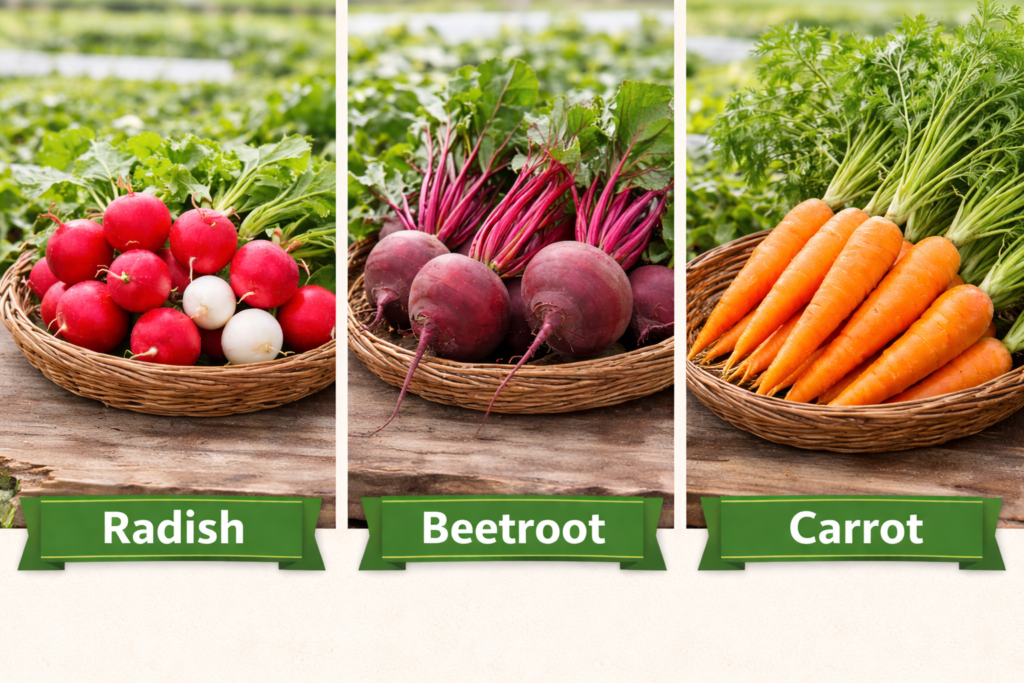
Root crops such as radish, beetroot, and carrot are difficult to grow in hydroponics because roots need space to expand. They are usually grown only for experiments or small-scale trials.
Major Challenges in growing Root Crops in Hydroponics
- Require physical expansion space
- Difficult root formation in water-based systems
- Low yield-to-cost ratio
Recommended Hydroponic Systems for Root Crops
Root crops require hydroponic systems that can physically support root expansion while maintaining good moisture and oxygen balance. Therefore following hydroponic systems are recommended to grow root crops.
- Deep media beds (sand or coco mix)
- Specialized aeroponic setups (experimental)
The above hydroponic systems are more complex and space-intensive, which is why root crops are usually grown only on a limited or experimental scale in hydroponics.
How difficult it is to Grow Root Crops
Growing root crops in hydroponics is relatively difficult because these plants need physical space for root expansion, which water-based systems do not naturally provide.
They are sensitive to root zone conditions, and improper support or compaction can lead to misshapen or poor-quality roots. Due to these challenges growing root crops are not as popular in hydroponic setups.
Commercial Insight: Growing Root Crops for the Indian Market
Root crops are not recommended for commercial hydroponics, especially in India, unless for R&D or niche markets.
It is not commercially Viable to Grow the Root Crops in Hydroponics. Best Decision is to Grow them in Soil.
Microgreens (Fastest Returns)
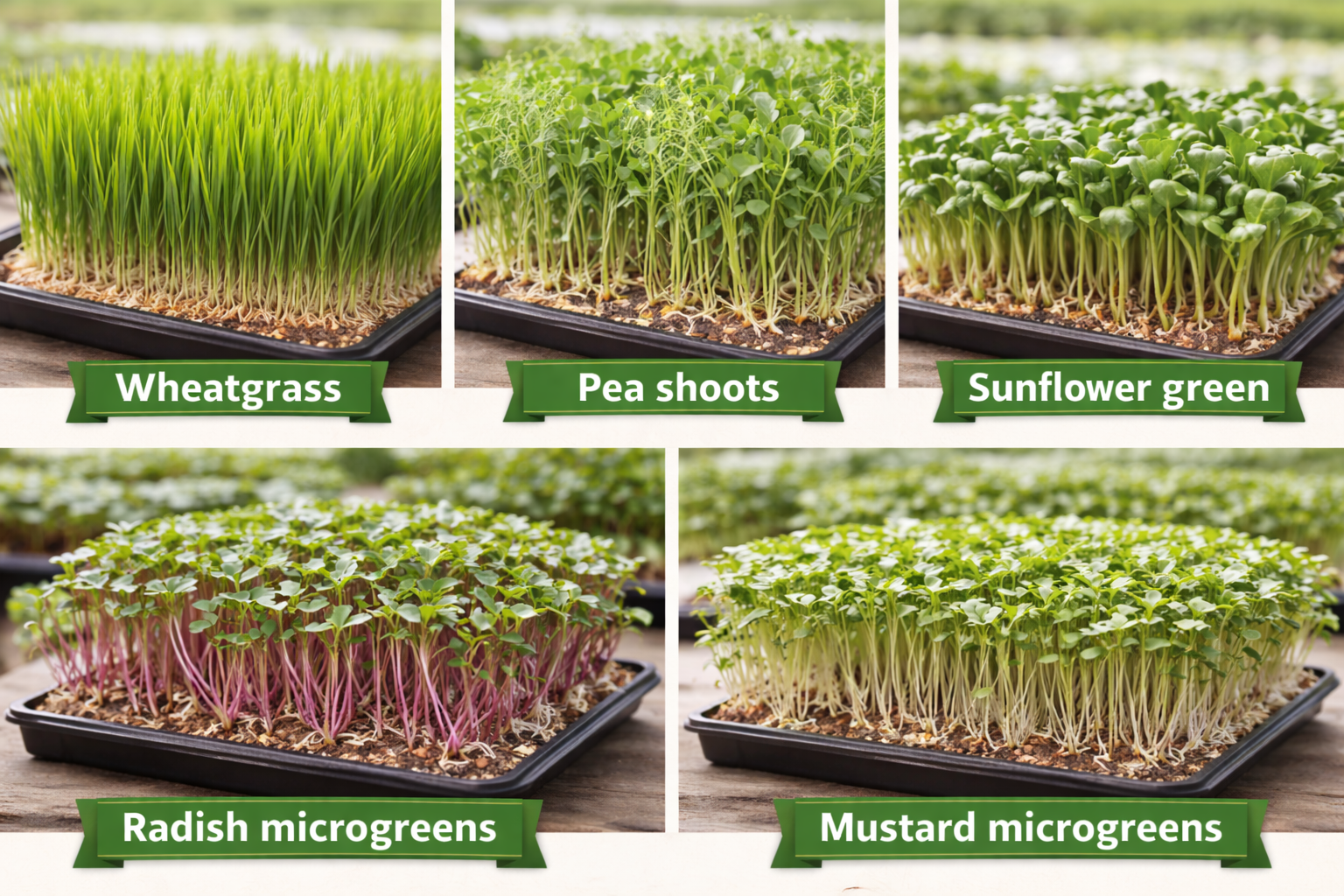
Microgreens like wheatgrass, pea shoots, sunflower greens, radish, and mustard grow very fast and are ready in 7–14 days. They need minimal setup and are ideal for beginners and small indoor farms.
Recommended Growing Conditions for Microgreens
Here is the table showing the recommended growing conditions for hydroponic microgreens.
Success Parameters for Hydroponic Micro Greens
STANDARD GROWING PARAMETERS
Hydroponic Microgreens | Fast-Cycle Guide
| Parameter | Recommended Range | Remarks |
|---|---|---|
| Air Temperature | 18 – 26 °C | Stable temp ensures uniform growth |
| Relative Humidity | 40 – 60% | High humidity encourages mold/damping off |
| Light Duration | 10 – 14 hours/day | Apply light only after germination |
| Light Intensity | 100 – 250 µmol/m²/s | Gentle light prevents leggy stretching |
| Parameter | Recommended Range | Remarks |
|---|---|---|
| EC Strength | 0.4 – 0.8 mS/cm | Very low requirement; often plain water suffices |
| pH Range | 5.5 – 6.5 | Not critical due to very short cycles |
| Nutrient Temp | 18 – 22 °C | Plain water is often sufficient for short cycles |
| Airflow | Good Ventilation | Prevents fungal growth in dense trays |
| Parameter | Standard Value | Remarks |
|---|---|---|
| Growing Medium | Coco/Grow Mat | Provides shallow support for dense roots |
| Watering Method | Mist / Shallow Flow | Avoid overwatering to prevent root rot |
| Crop Cycle | 7 – 14 days | Fastest commercial harvest cycle |
Microgreens are unique because they rely primarily on the energy stored in the seed rather than external nutrients. Maintaining low humidity and consistent airflow is the most important factor in preventing crop failure.
Note: Proper "Blackout" (germination in the dark) for the first 2-3 days is essential for achieving the stem height required for efficient harvesting.
For microgreens, cleanliness and timing matter more than nutrients—hygiene and airflow directly impact yield and quality.
Why Microgreens Are Popular
- Harvest in 7–14 days
- Very high nutrient density
- Minimal infrastructure
- Low water and nutrient usage
Recommended Hydroponic Systems for Microgreens
Microgreens are best grown in simple hydroponic systems that support shallow roots and allow fast, repeatable cycles. Therefore following hydroponic systems are recommended for microgreens.
- Shallow trays
- NFT
- Ebb and Flow trays
Above hydroponic systems are commonly used because they provide uniform moisture and are easy to clean between batches. These systems are low-cost, space-efficient, and ideal for rapid production and frequent harvesting.
How Difficult it is to grow Microgreens
Growing microgreens in hydroponics is easy from a technical standpoint but demanding from an operational perspective. The plants grow quickly and require minimal nutrients, but success depends on precise timing, hygiene, and daily harvesting.
Commercial Insight: Growing Micro Greens for the Indian Market
Microgreens are ideal for small indoor farms and startups, but success depends heavily on consistent buyers.
1 Sq. Ft. Profit Roadmap for Micro Greens
Microgreens: 1 Sq. Ft. Analysis | Currency: INR (₹)
Key Consideration for Growing Microgreens
- Profit depends on assured daily sales
- High seed cost directly impacts margins
- Shelf life is 1–3 days without cold storage
- Overproduction leads to direct wastage
Microgreens can deliver exceptionally high profit per square foot, but they carry high operational intensity and sales risk. They are best suited for small, demand-driven setups with pre-identified buyers rather than large, speculative production.
Common Mistakes While Selecting Hydroponic Crops
Choosing the wrong crop is the most common reason hydroponic setups fail in India. To ensure your farm thrives, avoid these frequent pitfalls that often lead to stunted growth or root rot.
Ignoring Local Climate (The “Summer” Trap)
Many beginners choose crops like Kale or Romaine Lettuce based on global YouTube videos, forgetting that Indian summers can reach 40°C.
- Mistake: Growing “cool-weather” crops in peak summer without climate control.
- Fix: Choose heat-tolerant varieties or switch to Microgreens during the hottest months.
Matching the Wrong Crop to the System
- Mistake: Attempting to grow heavy fruiting crops like Tomatoes or Pumpkins in an NFT pipe system.
- Fix: Select the crop according to recommended NFT system only.
Overlooking Water Temperature
- Mistake: Monitoring the room temperature only, Thinking that a cool room means cool plants.
- Fix: Monitor Water Temperature. In hydroponics, the Nutrient Solution Temperature is the “heartbeat.” If the water in your tank gets too warm (above 28°C), the roots will rot regardless of how healthy the leaves look.
Starting with “Diva” Crops
- Mistake: Starting your very first farm with Strawberries or Exotic Peppers.
- Fix: These crops are “Difficult to Grow”. They demand perfect pH and EC balance. Start with leafy greens because they forgive the beginner errors.
Growing Without a “Selling” Plan
- Mistake: Growing high-volume crops without knowing where to sell them.
- Fix: For commercial success, Market Linkage comes first. Grow what your local community or nearby restaurants actually buy regularly.
How to Choose: Which Hydroponic Crop is Right for You?
Hydroponics is not about growing everything—it’s about growing the right crops in the right system for the right market. Crop selection alone can decide whether your hydroponic setup becomes a profitable farm or an expensive experiment.
Use the Master Selection Matrix below to find your match based on these three “Yuktis”:
- Space & System: Match your crop to your hardware (e.g., Dutch Buckets for Tomatoes).
- Skill vs. Reward: Start with Leafy Greens if you’re new; move to Fruiting Crops once you’ve mastered pH/EC.
- Market Goal: Choose Herbs or Microgreens if you are looking for the highest profit per square foot.
Hydroponic Crop Selection Matrix
| Category | Water Temp | pH Level | EC Range | Best System | Net Profit (₹/sqft) |
|---|---|---|---|---|---|
| Leafy Greens | 18°C – 22°C | 5.5 – 6.5 | 0.8 – 1.6 | NFT / DWC | ₹500 – 830 |
| Culinary Herbs | 18°C – 24°C | 5.5 – 6.5 | 1.0 – 1.8 | NFT / Towers | ₹220 – 2100 |
| Microgreens | 18°C – 22°C | 6.0 – 6.5 | 0.4 – 0.8 | Hydro Trays | ₹1200 – 2500 |
| Fruiting Crops | 20°C – 25°C | 5.8 – 6.5 | 2.0 – 3.5 | Dutch Bucket | ₹300 – 1270 |
| Exotic Greens | 16°C – 20°C | 5.5 – 6.5 | 1.2 – 2.0 | NFT Systems | ₹400 – 1800 |
Ready to start your Hydroponic journey?
Whether you want fresh salads for your family or a commercial farm, we have the right Yukti for you.
Get Your Custom Quote Today →Zero-Pesticide. Smart-Tech. Self-Reliant.