
Hydroponic farming is slowly becoming popular in India—especially among home gardeners, terrace farmers, startups, and small commercial growers.
For a beginner in India, choosing the right hydroponic system is more important than buying expensive equipment. In this article, we will explain the different types of hydroponic systems, their capital cost, yield per square meter, and help you select the right one using a simple selection matrix.
What Is Hydroponics? (Simple Explanation)
Hydroponics is a method of growing plants without soil. Instead, plant roots receive water, nutrients, oxygen directly in a controlled way. This leads to:
- Faster growth (20–40% faster than soil)
- 80–90% less water usage
- Higher yield per square meter
Major Types of Hydroponic Systems Used in India
Here is the list of major types of hydroponics systems used in india:
- Nutrient Film Technique (NFT)
- Vertical Hydroponic Tower System
- Deep Water Culture (DWC)
- Wick System (Passive System)
- EBB and Flow (Flood & Drain)
- Drip Hydroponic System
- Dutch Bucket System
- Aeroponics (Advanced)
| System | Best For | Veggies | Complexity | Cost |
|---|---|---|---|---|
| NFT | Budget Friendly | Lettuce, spinach, herbs, strawberries | Medium | Medium |
| Vertical Tower | Budget Friendly | Lettuce, spinach, herbs, strawberries | Medium | Medium |
| DWC | Manual (DIY) | Lettuce, basil, kale | Low | Low |
| Wick | Educational kits, beginners, low-budget setups | Herbs, microgreens | Very Low | Very Low |
| EBB & Flow | Medium-scale, experimental setups | Tomatoes, peppers, cucumbers | Medium | Medium |
| Drip | Commercial farms, polyhouses | Tomatoes, chilies, cucumbers, flowers | Medium | High |
| Dutch Bucket | Commercial, rooftop | Tomatoes, cucumbers, vines | Medium | Medium |
| Aeroponics | Advanced growers, research labs, high-tech farms | Leafy greens, research crops | High | High |
Nutrient Film Technique (NFT)
A thin film of nutrient solution continuously flows through channels where plant roots are partially submerged. This system is Best for Lettuce, spinach, herbs, and strawberries.
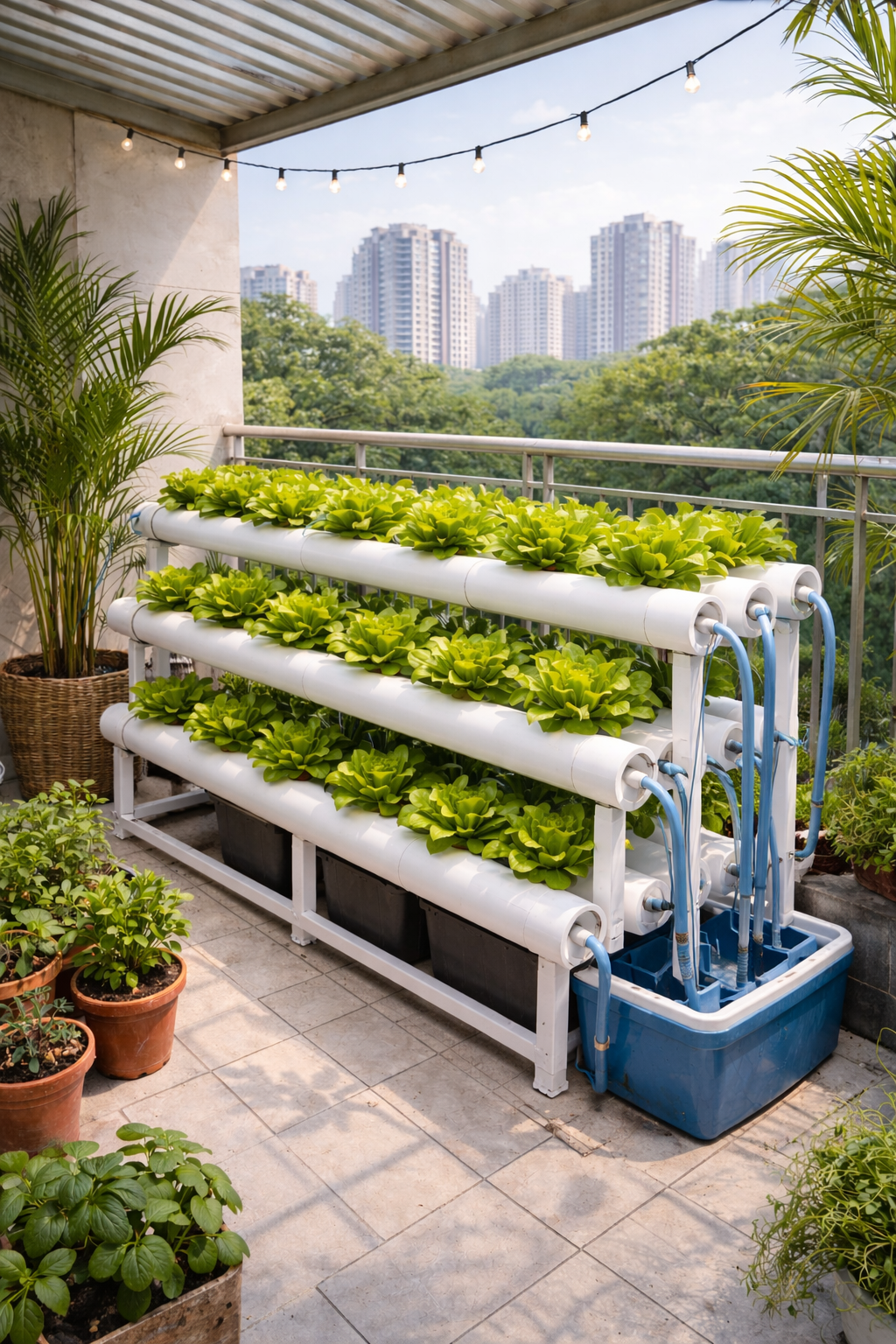
Pros of NFT System:
- Low water usage
- Excellent oxygen exposure
- Ideal for leafy greens
Cons of NFT System:
- Pump failure can damage plants quickly
- Not suitable for large fruiting plants
Best use case:
- Home hydroponics
- Vertical farms
- Commercial leafy-green production
Vertical Hydroponic Tower System
This system is not pure NFT and not DWC. It is best described as a recirculating top-feed vertical system and a best choice for rooftop hydroponic setup.
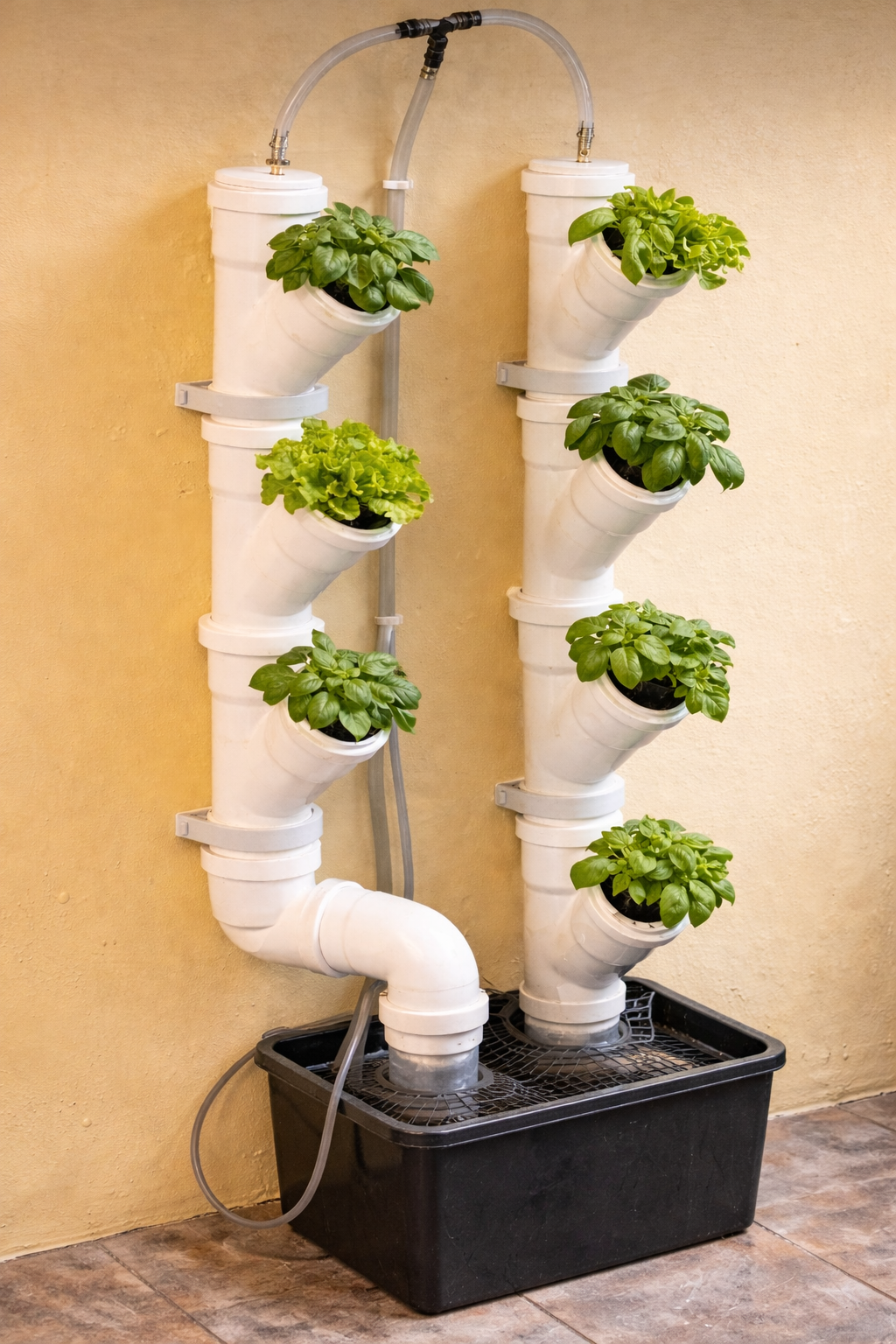
Pros of Vertical Tower hydroponic System:
- Low water usage
- Maximum plant density per square foot
- Excellent oxygen exposure
- Low labor for harvesting
- Better space optimization
Cons of Vertical Tower hydroponic System:
- Requires high-quality pumps to lift water vertically
- Light distribution can be uneven if not rotated.
Best use case:
- Home hydroponics
- Vertical farms
Deep Water Culture (DWC)
Plant roots are fully submerged in oxygenated nutrient solution using air stones. DWC system is best for growing Lettuce, basil, kale.
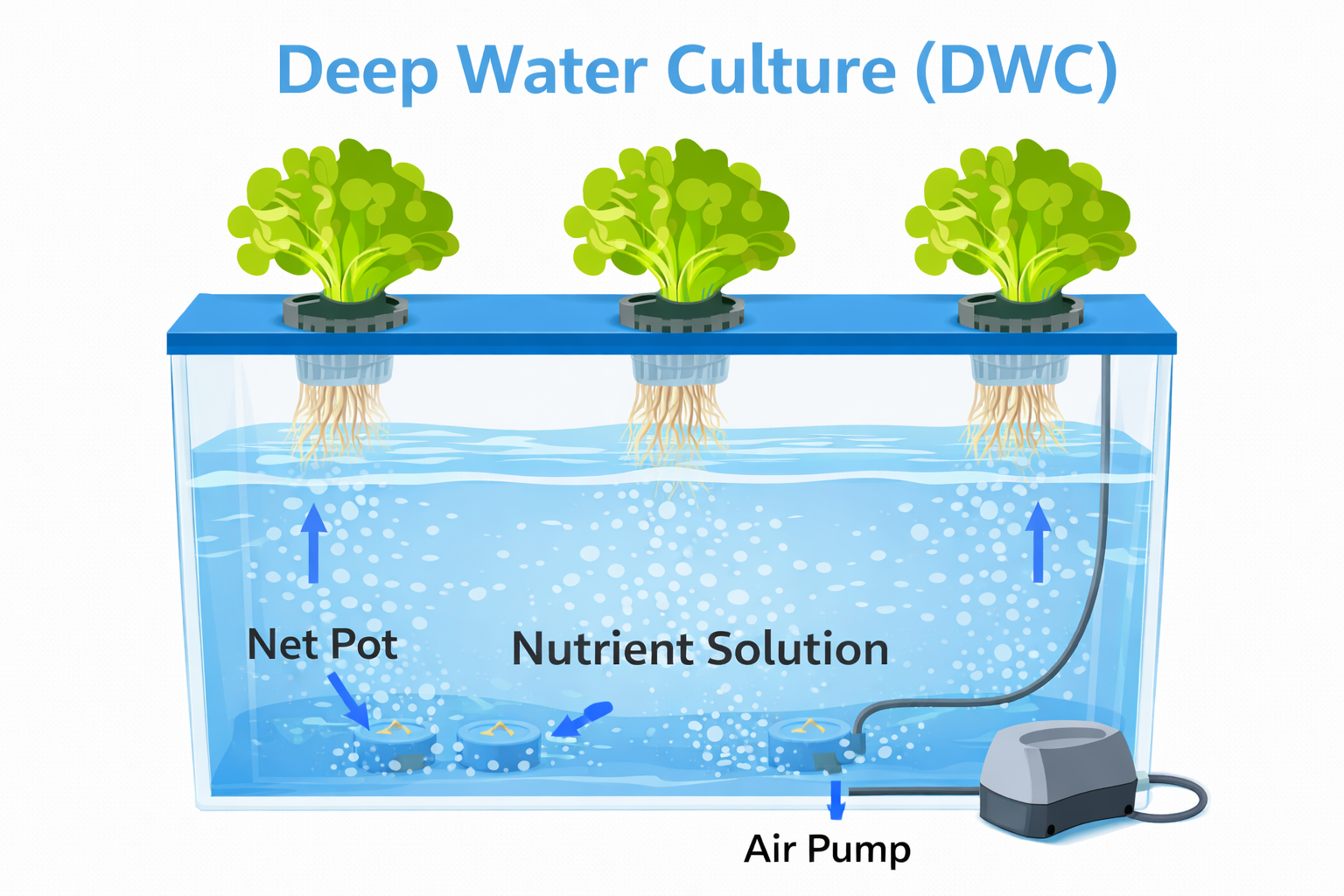
Pros of DWC System:
- Very easy for beginners
- Low setup cost
- Fast plant growth
Cons of DWC System:
- Water temperature must be controlled
- Not ideal for long-term crops
Best use case:
- Beginners
- DIY home hydroponics
Wick System (Passive System)
Nutrients are delivered to plant roots using a wick through capillary action—no pumps required. Wick system is best for Herbs, microgreens
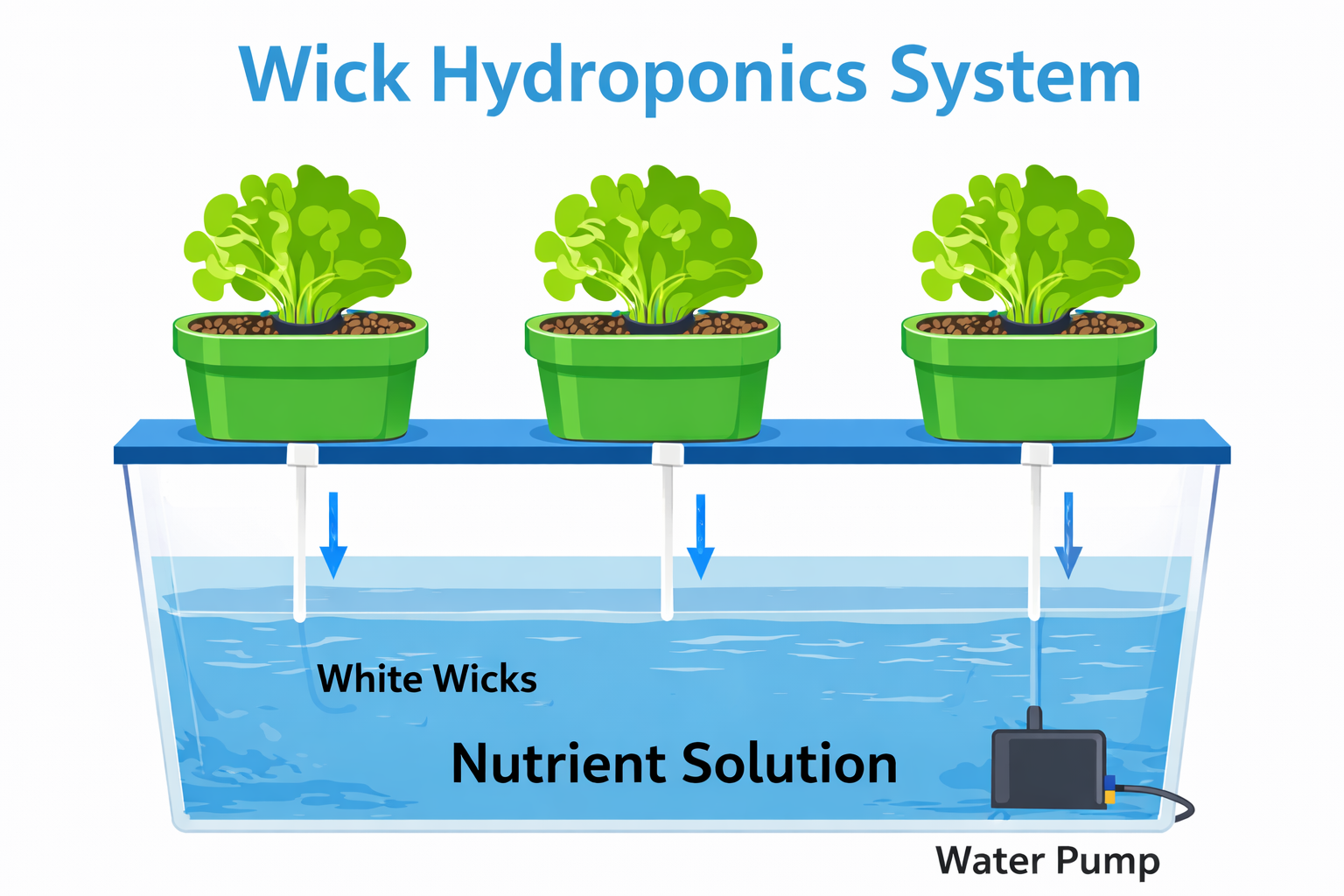
Pros of Wick System:
- No electricity required
- Very low maintenance
Cons of Wick System:
- Slow nutrient delivery
- Not suitable for heavy-feeding plants
Best use case:
- Educational kits
- Beginners
- Low-budget setups
EBB and Flow (Flood & Drain)
The grow tray is periodically flooded with nutrient solution and then drained back into a reservoir. This system is best for Tomatoes, peppers, cucumbers
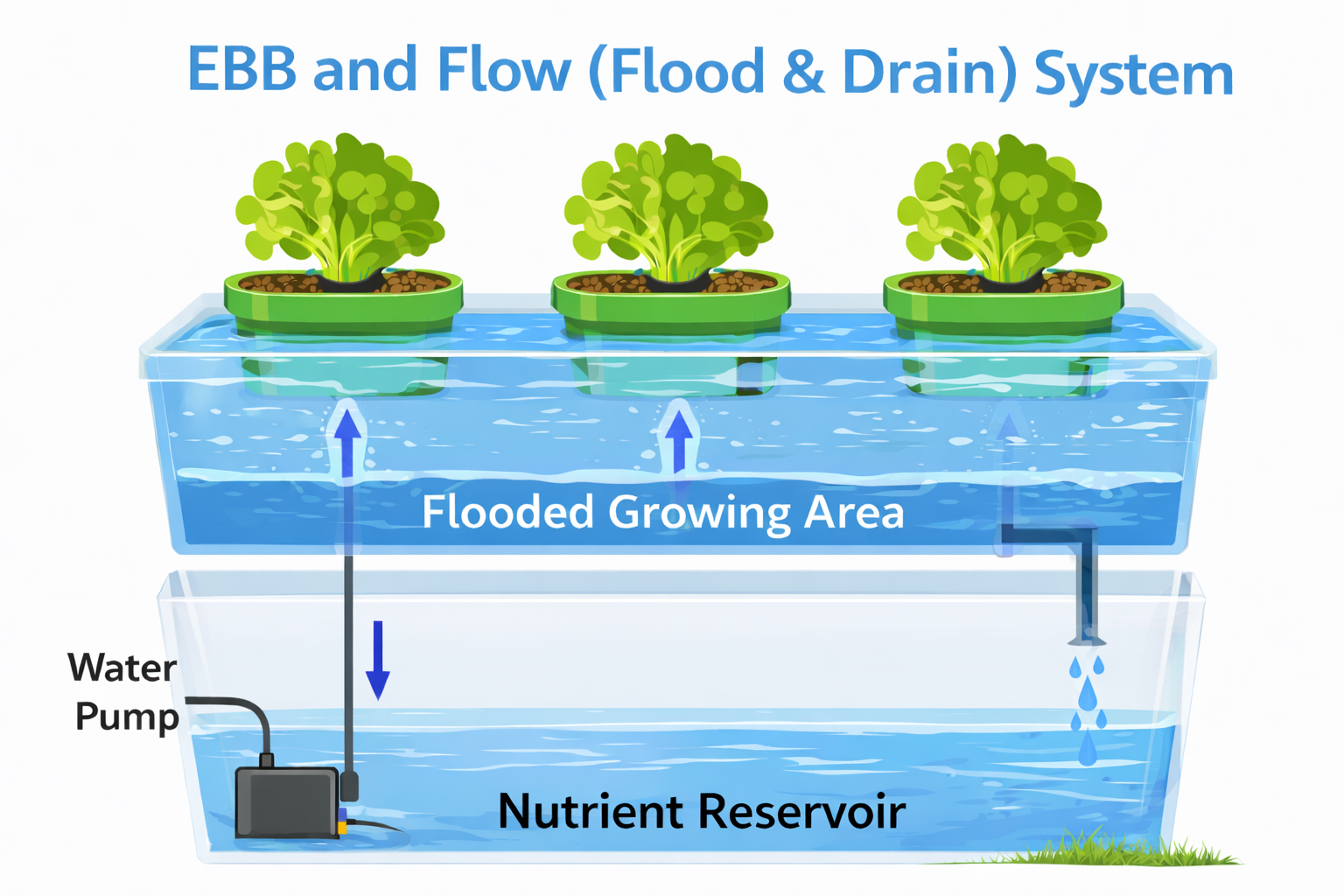
Pros of EBB:
- Supports larger plants
- Flexible growing media
Cons of EBB:
- Timer and pump dependent
- Risk of root rot if mismanaged
Best use case:
- Medium-scale growers,
- Experimental setups
Drip Hydroponic System
Nutrient solution is slowly dripped onto the base of each plant. Excess solution may be reused or drained away. Drip hydroponic system is best for tomatoes, chilies, cucumbers, and flowers.
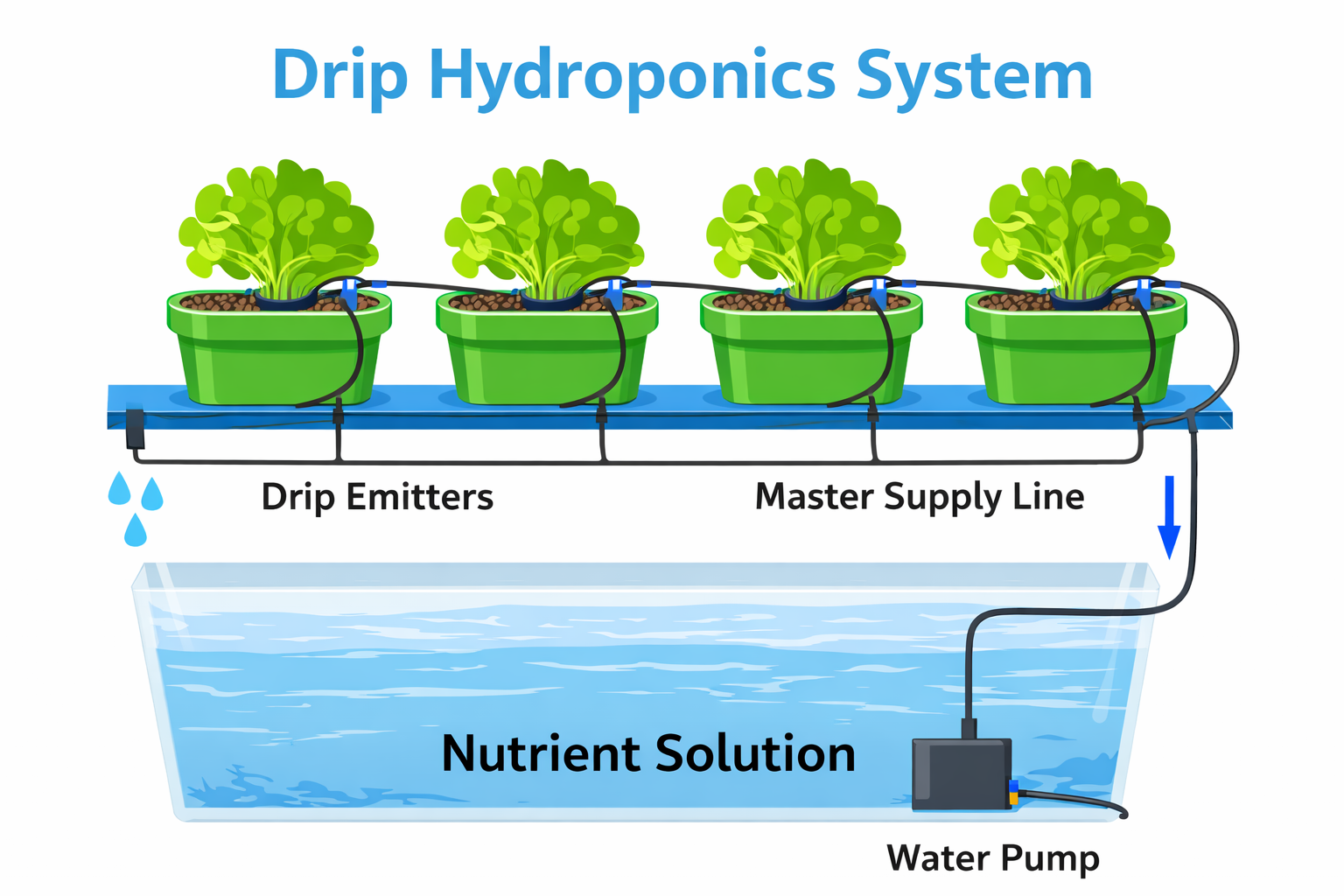
Pros of Drip hydroponic system:
- Highly scalable
- Precise nutrient control
Cons of Drip hydroponic system:
- Emitters can clog
- Requires regular monitoring
Best use case:
Commercial hydroponic farms, polyhouses
Dutch Bucket System
Plants grow in individual buckets filled with inert media and are fed via drip irrigation. Dutch Bucket system is best for Tomatoes, cucumbers, vines.
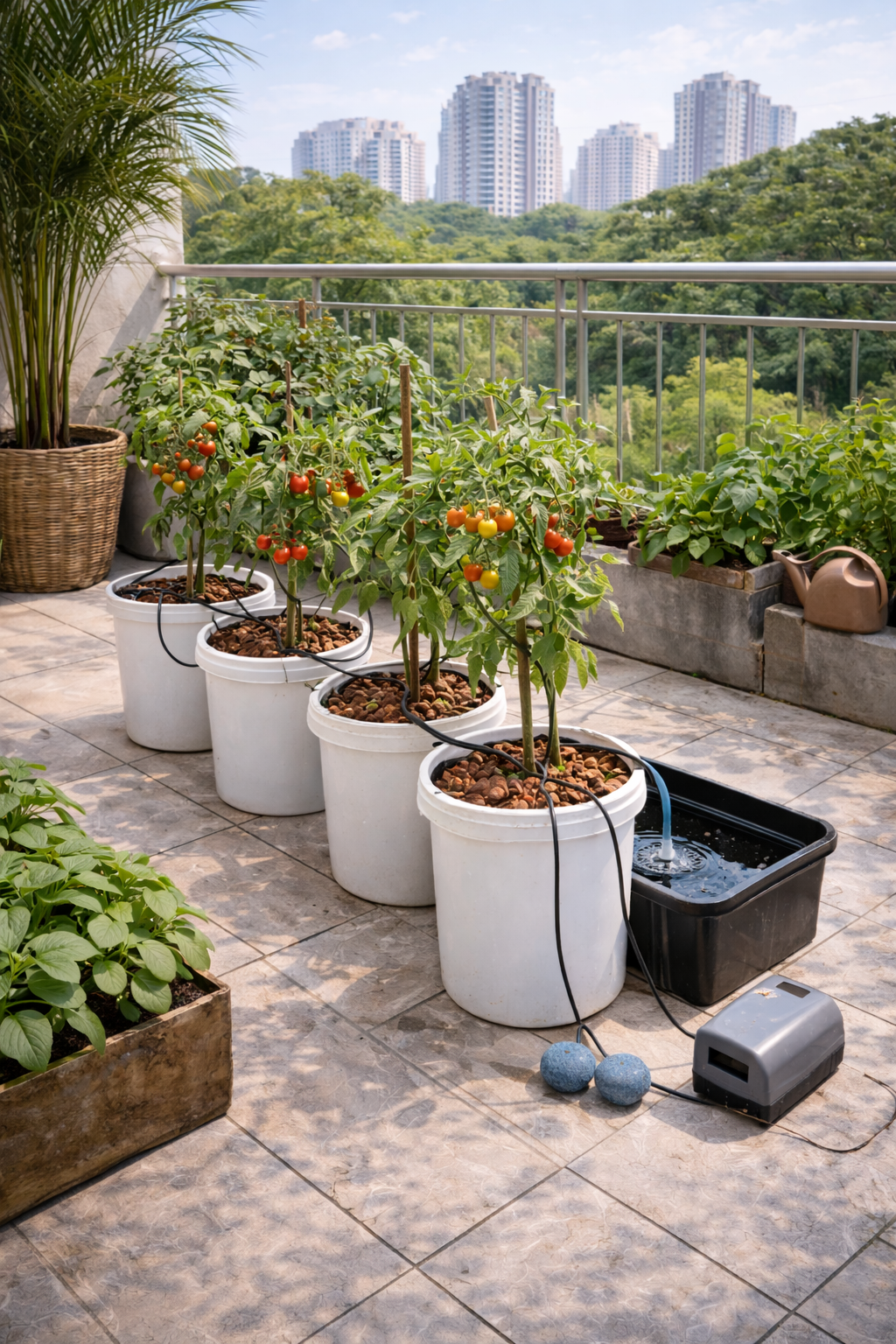
Pros of Dutch Bucket System:
- Ideal for large fruiting plants
- Easy nutrient management
Cons of Dutch Bucket System:
- Requires more space
- Higher setup cost
Best use case:
- Commercial farms
- Rooftop hydroponics
Aeroponics (Advanced)
Plant roots are suspended in air and misted with nutrient solution at regular intervals. Aeroponics system is best for Leafy greens, research crops.
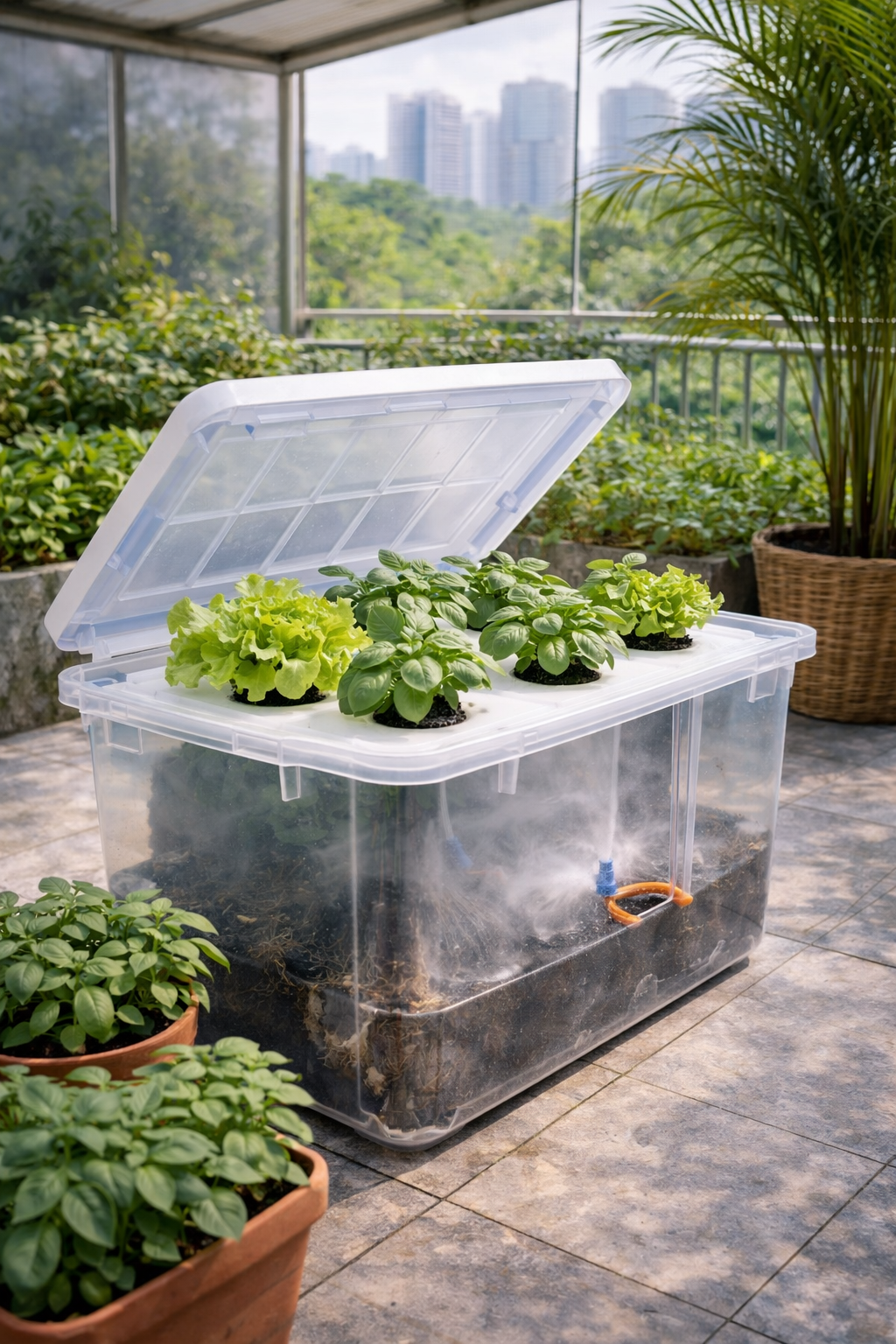
Pros of Aeroponics System:
- Maximum oxygen exposure
- Fastest growth rate
- Very water efficient
Cons of Aeroponics System:
- High initial cost
- Requires technical expertise
Best use case:
- Advanced growers
- Research labs
- High-tech farms
Which Hydroponic System Is Best for You?
- Beginners: DWC or Wick System
- Home growers: NFT or Dutch Bucket
- Commercial farming: Drip System or NFT
- High-tech farming: Aeroponics
The best choice depends on budget, crop type, maintenance capacity, and available space.
Approximate capital cost and yield
| System | Capital Cost (₹) | Yield (kg) / cycle / Sq meter |
|---|---|---|
| NFT | 1,200 to 2,500 | 5 to 8 |
| DWC | 600 to 1,200 | 4 to 6 |
| Wick | 300 to 600 | 2 to 3 |
| EBB & Flow | 1,500 to 3,000 | 4 to 7 |
| Drip | 2,000 to 4,000 | 6 to 10 |
| Dutch Bucket | 2,500 to 4,500 | 12 to 18 |
| Aeroponics | 6,000 to 10,000 | 8 to 12 |
Understanding the different types of hydroponic systems is the first step toward successful soilless farming. Whether you’re growing lettuce at home or planning a commercial hydroponic venture, choosing the right system along with right crop for a season can dramatically impact yield and maintenance effort.
Hydroponics isn’t just a trend—it’s the future of sustainable agriculture.
Which hydroponic system is best for a small balcony in India?
For small urban balconies, the Vertical Hydroponic Tower is the best choice. It uses vertical space efficiently, allowing you to grow 20–40 plants in just a few square feet. If you are on a budget, a small NFT (Nutrient Film Technique) kit or a DWC (Deep Water Culture) bucket also works perfectly for balcony gardening.
Can I grow tomatoes and cucumbers in an NFT system?
While you can grow them, it is not recommended. NFT channels are usually shallow, and the heavy root systems of tomatoes or cucumbers can block the water flow, causing overflows or root rot. For large fruiting plants, the Dutch Bucket System or a Drip System is much more effective as they provide better physical support and root space.
Does a hydroponic system require 24/7 electricity?
Most active systems like NFT and Aeroponics do require consistent electricity to run pumps and timers. However, if you live in an area with frequent power cuts, you can use a DWC (Deep Water Culture) system with a battery-backed air pump, or a Wick System, which is passive and requires no electricity at all.